Gutter Alternatives: What Actually Works Instead of a Gutter
I already made the case for why gutters exist in the first place in an earlier post — the short version is roof runoff has to go somewhere, and without a system it goes straight down next to your foundation. This post is the honest follow-up for anyone who read that and still wants to know what the real options are if you don't want a standard gutter hanging off your roofline. Some of what gets marketed as a "gutter alternative" genuinely skips the gutter. A lot of it is just a gutter you can't see. Worth knowing which is which before you spend money on either.
Options That Actually Skip the Gutter
Yard grading. If the ground around your foundation is properly sloped, water sheets off the roof edge and keeps moving away from the house instead of pooling against it. The International Residential Code's own drainage requirement (Section R401.3) calls for a fall of at least 6 inches within the first 10 feet away from the foundation — that's the real, code-referenced number, not a rule of thumb someone made up. It only works as a true gutter substitute on new construction or a full regrade, though; you can't just add a few shovels of dirt next to an existing foundation and call it solved.
Drip edge and drip path. A drip edge is metal flashing along the roof's edge that most homes already have whether they have gutters or not — it doesn't manage water, it just stops it from wicking back under the shingles. Pair it with a drip path (a line of pavers or crushed rock set below the edge, angled away from the house) and you get a cheap, low-maintenance way to keep runoff from splashing directly against the foundation. It doesn't collect water or move it anywhere specific — it just controls where the first few feet of splatter lands.
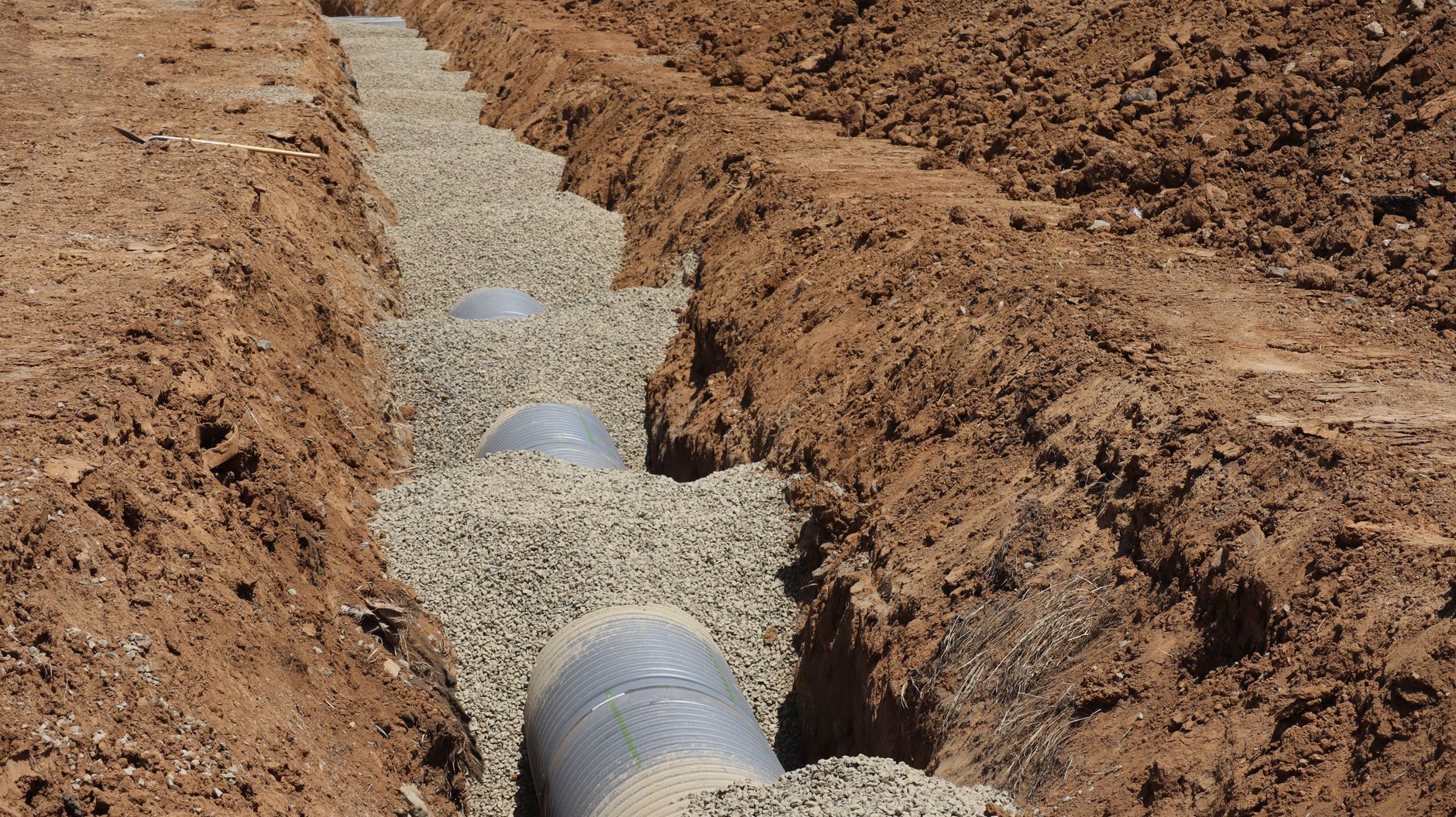
French drains / ground gutters. A perforated pipe buried in a gravel-backed trench, running along the drip line and sloped to daylight or a dry well. This is real infrastructure, not a cosmetic swap — national cost-guide data puts a full French drain system at roughly $500 to $18,000 depending on length and depth, with $9,250 commonly cited as the national average for a complete system; a simpler surface or curtain drain runs closer to $10-35 per linear foot. It's the closest thing on this list to an actual engineered replacement for a gutter's job, and it's also the most expensive and most disruptive to install.
Rain dispersal systems. Products like Rainhandler mount along the roof edge and break falling water into a fine spray meant to land close to the house without concentrating it. I haven't found independent, third-party testing of how these actually perform in sustained Pacific Northwest rain versus a short, hard thunderstorm — most of what's out there is manufacturer material, and I'd rather say that honestly than repeat their own claims as verified fact.
Options That Are Still a Gutter, Just Different
Rain chains. A decorative, open replacement for a closed downspout. I've covered these in real depth — the honest evaluation, including where they genuinely work and where they don't — but the short version is a rain chain still needs a gutter to hang from. It replaces the downspout, not the gutter itself.
Built-in / hidden / box gutters. These are gutters that are built into the roofline itself instead of hanging below it — the classic version is a box gutter built directly into the roof structure, and I wrote a full breakdown of a common modern variant, fascia-style gutters, since it's a real, established product in this region, not a rare specialty item. It looks like "no gutter" from the ground. It's still a gutter, with its own maintenance and repair tradeoffs.
Copper gutters. Sometimes shows up on "alternatives" lists simply because it looks different from standard aluminum — but it's still a hung gutter doing the same job. I've gone deep on copper's real cost math and lifespan separately.
What Actually Holds Up Here
A lot of the national "gutter alternatives" content reads like it was written for a climate with a handful of hard summer thunderstorms a year. Western Washington isn't that — it's sustained rain across months, not isolated downpours. That changes which of these options are realistic. Yard grading and a proper French drain are real, engineered water management and hold up fine here. Drip edges and drip paths help with splash but don't move meaningful volume during a long soaking rain. Rain dispersal systems are the one I'd want independent local testing on before recommending over an actual gutter, given how much total water this region sheds compared to where a lot of that marketing is written for.
My honest read, for what it's worth: for most homes here, a properly installed and maintained gutter system is still the simplest, most proven way to keep that much sustained water away from your siding and foundation. The alternatives above are real, and some of them (grading, French drains) are genuinely excellent add-ons alongside a gutter system rather than instead of one. Going gutter-free entirely is a bigger bet on this region's rain totals than most of the articles pushing it seem to account for.
Frequently Asked Questions
Can a house really have no gutters at all? Yes, especially on new construction with a well-executed grade and drip edge — but it's a deliberate design decision made before the roof goes on, not something you casually skip on an existing home.
Do gutter alternatives work as well as real gutters? Some (French drains, proper grading) are genuine engineered solutions. Others (drip paths, dispersal systems) reduce splash and erosion but don't move the same volume of water a full gutter-and-downspout system does.
Is yard grading alone enough to skip gutters? On the right lot, combined with a drip edge, yes — but it has to be done right the first time (that IRC 6-inch-in-10-feet minimum), since regrading later around an existing foundation is a much bigger project than it sounds.
Weighing whether to go without gutters, or just want an honest read on what your specific roofline actually needs? See the gutter repair & maintenance service or reach out for a free estimate.
Sources: 2024 International Residential Code Section R401.3 (via ICC digital codes and InterNACHI), national French drain cost data aggregated across multiple home-improvement cost guides (Angi, LawnLove, HomeGuide), this site's own previously verified material lifespan research (copper, wood, zinc, vinyl, and galvanized steel gutter posts).