Residential Gutters, Start to Finish
Residential Gutters: How to Choose the Right Gutters for Your House
Most people shopping for gutters for a house have not picked a material, a size, a profile, or a color yet — they just know the current ones are failing, or the house doesn't have any. That's a fine place to start. There are really only five decisions in residential gutters, they happen in a specific order, and this page walks through all five with real numbers instead of a sales pitch. I'm Aaron, I've been doing this across Pierce and Thurston County for over 5 years as a licensed General Contractor, and I do the work myself.
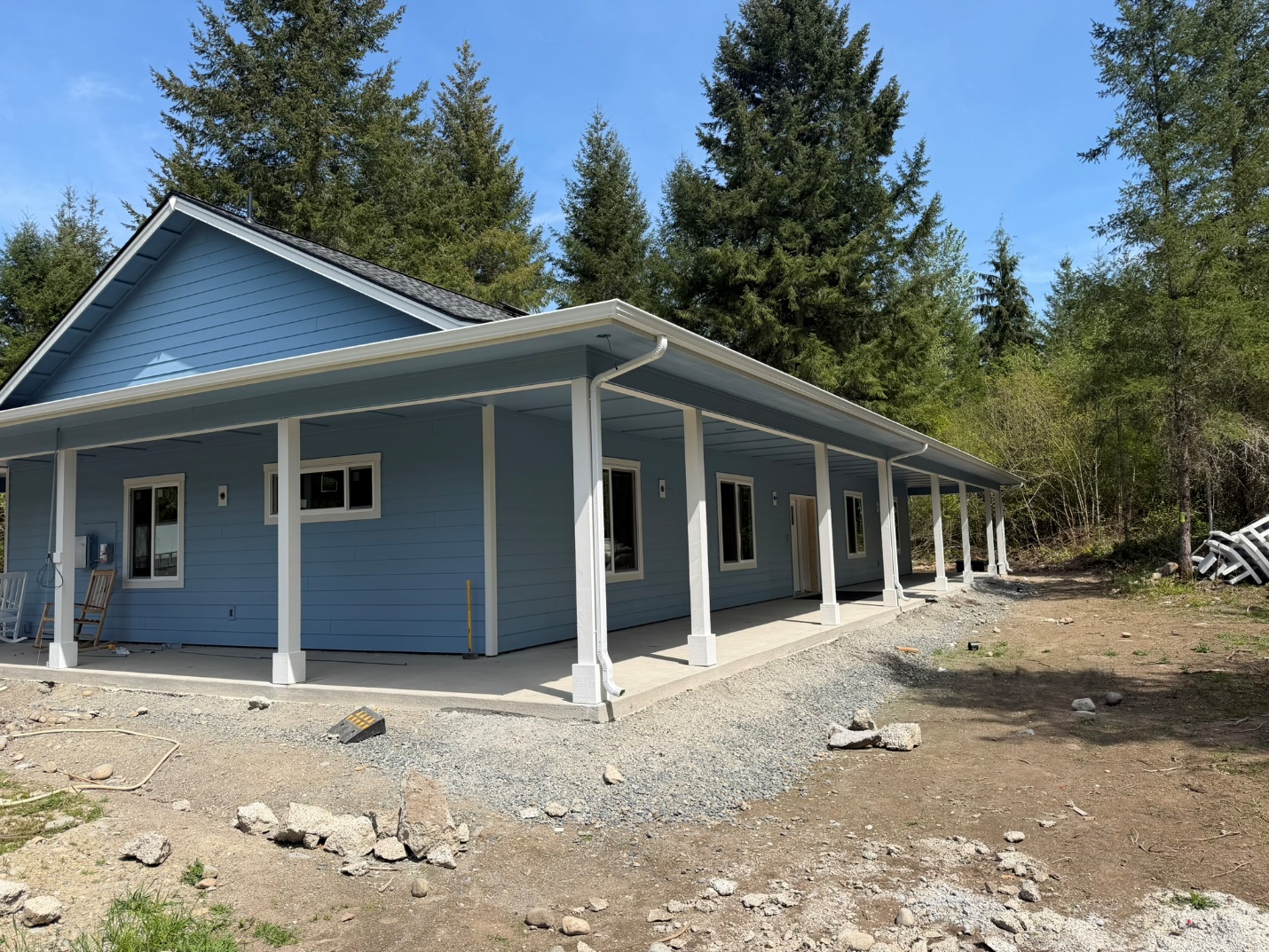
The five decisions, in the order they actually happen
Choosing gutters for your home feels like a big open question until you break it into steps. Material comes first because it sets your cost ceiling and your lifespan. Size comes second because it depends on your roof, not your taste. Profile, guards, and color come after that. Here's the whole decision in one table, with the deeper breakdown for each step linked alongside it.
| Step |
The decision |
What most South Sound homes end up with |
| 1 |
Material |
Seamless aluminum, .032" gauge on longer runs |
| 2 |
Size |
5-inch on simple roofs, 6-inch on bigger or steeper ones |
| 3 |
Profile |
K-style, unless the home has real historic character |
| 4 |
Guards |
Micro-mesh on wooded lots, skip them on open ones |
| 5 |
Color |
Matched to the trim or fascia, not the siding |
| — |
Cost |
About $2,800-$4,000 for a typical single-family home |
Step 1: What material should residential gutters be made of?
For nearly every house in this region, seamless aluminum. It resists rust in a climate that stays wet for months, it typically lasts 20-30 years, and it costs a fraction of the alternatives. Copper is a legitimate upgrade at 50+ years if you want the look. Steel and vinyl both have real problems here, and I'll tell you why rather than just quoting them.
The short version of why: a lot of national gutter advice warns about freeze-thaw cycles, which is a Minnesota problem. Western Washington winters are mild. What actually wears out a gutter system here is sustained water volume over months and a steady supply of fir and pine needles. Once you frame the choice that way, material gets simple — rust resistance wins, and aluminum and copper are the two that don't rust.
| Material |
Typical lifespan |
Cost per ft, installed |
Honest verdict for a home here |
| Aluminum (seamless) |
20-30 years |
$6-20/ft, most jobs $7-13/ft |
The right default. Rust-resistant, light on the fascia, affordable |
| Copper |
50+ years |
$24-40+/ft |
A real upgrade, not just a look — if the budget is there |
| Galvanized steel |
20-30 years on paper |
$8-25/ft |
That number assumes the zinc coating stays intact. One scratch and it rusts fast in this much rain |
| Vinyl |
Shortest of the four |
$4-10/ft |
Fine for a shed. Bows under sustained flow and gets brittle in a cold snap |
One spec most homeowners never get asked about: gauge. Aluminum coil comes mostly in .027" and .032", and .032" is roughly 18% more metal. That sounds trivial and isn't — it shows up directly in dent resistance and in how straight a long run stays after twenty years of sag pressure. I lean toward .032" on most installs here for exactly that reason. The full breakdown of gauge, finish, and lifespan is in the aluminum gutter guide, and the four-material comparison lives in seamless gutters, explained honestly.
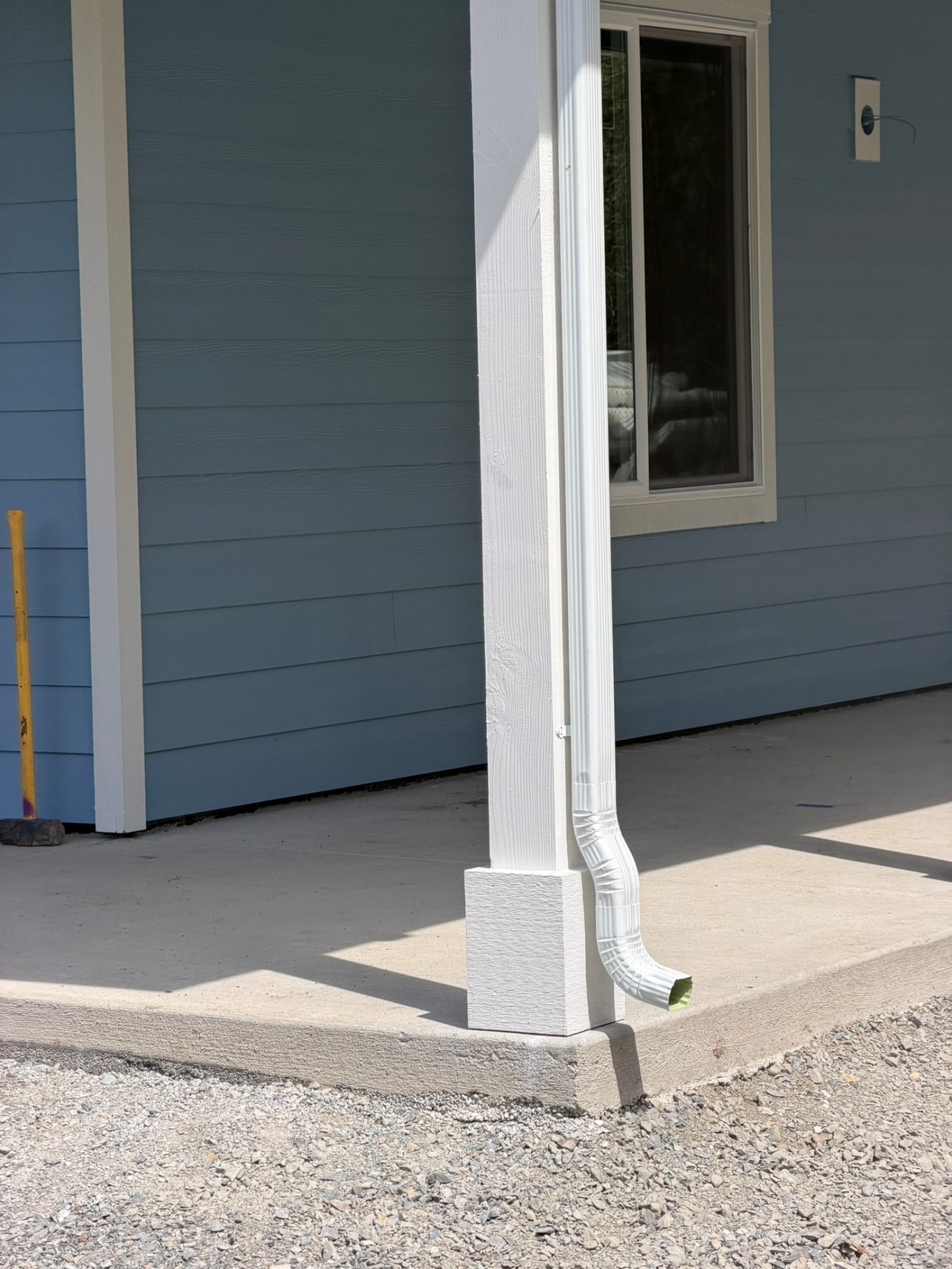
Step 2: What size gutters does my house need?
Size is set by your roof, not your preference. A 5-inch K-style gutter holds roughly 1.2 gallons per linear foot; a 6-inch holds roughly 2.0 — close to 70% more capacity for one extra inch of width. Smaller, simply-shaped roofs with moderate pitch do fine on 5-inch. Bigger roof planes, steeper pitches, and long runs push toward 6-inch here.
Using manufacturer sizing tables built on SMACNA sheet-metal formulas, a 5-inch gutter is rated for roof planes up to about 2,500 square feet at a 1-inch-per-hour rain rate on a level pitch, and a 6-inch for up to about 3,840 square feet. Pitch matters too, and this is the part DIY sizing guesses miss: steeper roofs shed rain faster, so the same square footage dumps more water per minute into the gutter.
| Roof plane size |
Typical gutter |
Downspout |
| Up to ~1,800 sq ft, moderate pitch |
5-inch |
2x3" or 3x4" |
| 1,800+ sq ft, or steep pitch |
6-inch |
3x4" |
| Very large or commercial-style roof |
7-inch or larger |
4x5" |
Two rules of thumb worth knowing even if you never do the math. Norm Abram of This Old House uses roughly 1 square inch of downspout cross-section for every 100 square feet of roof area. Tom Silva, the show's general contractor, recommends at least two downspout outlets on any run 60 feet or longer — one rarely keeps up on a long run no matter how wide the gutter above it is.
Local rainfall tips this more than people expect. Olympia averages about 50.6 inches of rain a year per NOAA's 1991-2020 climate normal; Tacoma and the Sea-Tac corridor run closer to 37. A commonly used rainfall-tiered rule puts homes under 40 inches a year comfortably on 5-inch, 40-60 inches into 6-inch-recommended territory, and 60+ into 6-inch-necessary. A lot of Thurston County sits solidly in that middle band. The full sizing math is in 5-inch vs. 6-inch gutters.
Step 3: K-style or half-round?
K-style for the large majority of modern homes — it's roughly 80% of residential gutter installations, it holds slightly more water at the same nominal width, and it costs meaningfully less to install and eventually replace. Half-round earns its place on genuinely historic architecture or when a homeowner specifically wants the look and the smoother debris-shedding.
| Factor |
K-style |
Half-round |
| Flow at 6-inch width |
~14.0-15.5 gallons per minute |
~12.5-14.0 gallons per minute |
| Cost per ft, installed (national) |
Roughly $9-41, averaging mid-$20s |
Roughly $13-44, driven mostly by material |
| Debris handling |
Angled corners where needles and grit pack in first |
Smooth curve, sheds and rinses cleaner |
| Availability |
Seamless aluminum almost everywhere |
Smaller market, needs a different bracket system |
| Best fit |
Standard modern construction |
Victorian, Tudor, Colonial, Craftsman — half-round was already being advertised by the 1870s |
Worth being straight about one thing: a lot of the "half-round has twice the capacity" style claims floating around don't agree with each other and I couldn't trace them to anything solid. The GPM figures above come from a regional Pacific Northwest sizing reference and show a real but modest edge for K-style, not a dramatic gap. The full comparison, including the two half-round sub-profiles, is in K-style vs. half-round gutters.
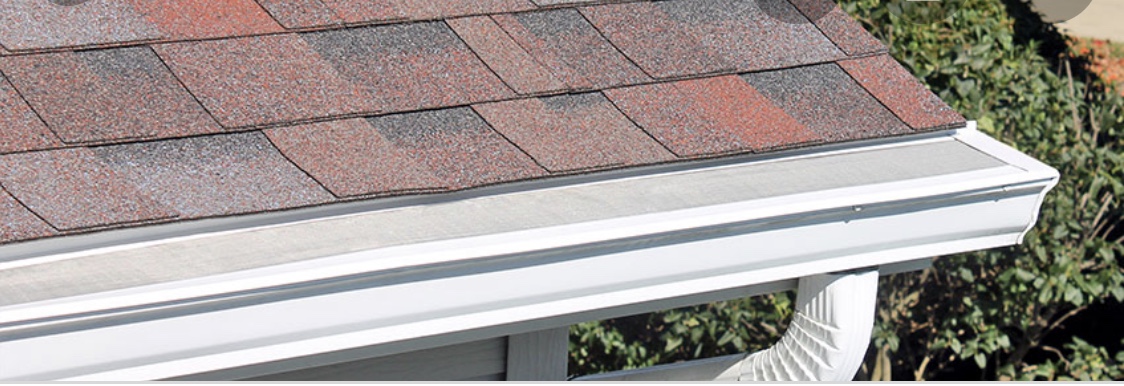
Step 4: Do gutters for a house need guards?
If you've got mature firs or pines over the roofline, probably yes. A 2025 This Old House survey of 1,000 homeowners found guards cut the share needing to clean twice a year from about half down to roughly 7%. That's a real improvement — and it's also not the "never clean again" promise the ads make. Open lots with little tree cover often don't need them at all.
Micro-mesh is what I install on most South Sound homes, because conifer needles interlock into mats differently than broad leaves and the wider screen, brush, and foam options don't handle them as well. Standard micro-mesh typically runs about $8-28 per linear foot installed, with most jobs landing near $9/ft; premium branded systems run $39-45+/ft. Bundling guards into the original install adds roughly $6-20 per foot but saves a second labor trip later.
The honest caveat: even good micro-mesh doesn't eliminate maintenance. Fine grit, shingle debris, and matted needles still accumulate — just a lot slower. Expect an occasional check, not zero. Full detail on guard types and what each one actually does is on the gutter guard and leaf filter page.
Step 5: What color should residential gutters be?
Match the trim or fascia rather than the siding — it's the more logical pairing, since the gutter physically mounts to the fascia board, not the wall a few feet below it. Matching the roof or going deliberate dark contrast are both legitimate too. There's no wrong answer on style. There is a climate consideration most guides skip entirely.
That consideration is staining. Western Washington's mix of shade, tree cover, and near-constant damp is close to ideal growing conditions for Gloeocapsa magma, the blue-green algae behind the dark streaking you see on roofs and light-colored gutters here. White and light cream will streak sooner under fir cover than they would in a drier climate, and will need washing more often to stay looking new. Darker tones — charcoal, bronze, black — mask it better between cleanings. That's not a reason to avoid white; plenty of homeowners here run white and keep it sharp. It's a reason to go in with realistic expectations.
On budget: white is the standard stock coil almost every fabricator keeps loaded, so it's typically the cheapest. Other colors are usually a special-order run, which costs a bit more per foot and can take longer to source. And whatever color you pick will mellow — most residential gutter coil ships with a baked-on polyester enamel finish that holds color for years but eventually chalks and fades. That's normal, not a defect. The full color framework is in how to actually pick a gutter color, and yes, I'll bring real samples to hold against your actual siding rather than asking you to judge off a screen.
How much do gutters for a house cost?
In the Tacoma area, gutter installation typically runs about $5.30 to $11.70 per linear foot overall, with seamless aluminum specifically landing around $6.40 to $11.10. For a full install or replacement on an average single-family home, most projects land between $2,000 and $5,500 total, with a lot of real jobs clustering at $2,800-$4,000.
| Line item |
What it typically adds |
| Seamless aluminum, installed (Tacoma area) |
$6.40-$11.10 per linear foot |
| Removing and hauling off old gutters |
$1-2 per linear foot, or a flat $150-350 |
| Downspouts |
$30-75 each installed; most homes need one every 20-40 ft |
| Gutter guards bundled into the install |
About $6-20 per foot depending on guard type |
| Seamless vs. sectional |
Seamless runs 30-50% more upfront |
Height, roof pitch, and how many corners and downspouts your home needs all move those numbers, which is why you'll get a specific figure after I've actually looked at your roofline — not a range pulled from a national average. Seattle, for reference, runs a bit higher at roughly $6.00-$13.20 per foot, which tracks with the usual labor-cost gap between the two markets. The complete local cost breakdown is in gutter installation cost in the Tacoma area.
One honest note on value: appraisers generally don't treat gutters as a value-add the way they'd treat a remodeled kitchen — they're considered a baseline expectation, not an upgrade. You're not buying resale value with new gutters. You're buying the thing that keeps water off your fascia, siding, and foundation every time it rains, which in this climate is most of the year.
Signs your house needs new gutters, not a repair
- Overflow that happens even right after a cleaning: that's a capacity problem, not a debris problem — usually a sizing issue
- Rust or staining showing up at multiple joints: an old sectional system failing one seam at a time, not in one spot
- Sections sagging or pulling away from the fascia: years of trapped water and weight at weak connector points
- Resealing the same seam more than once: at that point you're paying to delay the inevitable
- Building, re-roofing, or re-siding: the cheapest time to do gutters is while everything else is already open
When a repair is the better answer
If it's one or two failing sections on an otherwise sound system, gutter repair and maintenance is usually the cheaper, faster call, and I'll tell you that instead of quoting a full replacement. Full replacement makes sense once damage is spread across most of the run, the system's old enough that patching one seam just means the next one fails next winter, or the original sizing was simply wrong and it overflows no matter what gets fixed.
Who installs it, and why that matters
Once the five decisions are made, the install itself is where a gutter system is actually won or lost. What shortens a 20-30 year aluminum lifespan in practice is rarely the metal failing — it's undersized hangers, poor slope, or standing debris doing damage long before the aluminum gives out. Here's what you're getting:
- You get Aaron, not a call center. I answer the phone, do the estimate, and run the rolling machine myself on most jobs.
- 4.9 out of 5 stars across 90 five-star reviews and one four-star, with nothing rated below four.
- Licensed General Contractor — UBI No. 604 801 940, L&I License No. ARSPESC748MF. Bonded and insured.
- Over 5 years in business serving the South Sound specifically — not a national franchise assigning out a local territory.
- Being a General Contractor, not just a gutter installer, means soft fascia boards or a mossy roofline can get handled in the same visit instead of referred out.
- Free estimates, no pressure. If a repair genuinely beats a replacement, I'll say so.
"Aaron was quick to respond, honest about the work, and the final result looked great."
— Local homeowner
"He made the whole process easy and took care of the gutters the right way."
— Repeat customer
"Professional, dependable, and easy to work with. I would recommend him without hesitation."
— Satisfied client
Residential gutter installation service area
Based in Roy, WA, serving Pierce County, Thurston County, and South Sound communities including Auburn, Bonney Lake, Buckley, Carbonado, DuPont, Eatonville, Edgewood, Fife, Fircrest, Gig Harbor, Lakewood, Lacey, Milton, Olympia, Orting, Pacific, Puyallup, Rainier, Ruston, South Prairie, Spanaway, Steilacoom, Sumner, Tacoma, Tenino, Tumwater, University Place, Wilkeson, and Yelm. Not sure if your address is covered? Just ask — if it's a reasonable drive from Roy, it's probably a yes.
Ready to decide? Here's what happens next
Once you know roughly what you want, the actual work is seamless gutter installation — formed on-site from a continuous coil to match your exact roofline. If the boards behind the old gutters are soft or stained, that's fascia repair worth handling in the same visit rather than mounting a new system on compromised wood. And if you're keeping what you've got for now, gutter cleaning is the cheapest thing you can do for it.
Or skip all of it and just request a free estimate — I'll walk the roofline with you, measure it, and go through these five decisions in person with your actual house in front of us.
Frequently Asked Questions
What kind of gutters are best for a house? In a wet climate like the South Sound, seamless aluminum — it resists rust, lasts 20-30 years, and costs a fraction of copper. Copper is the legitimate upgrade at 50+ years. Steel rusts fast once its zinc coating is breached, and vinyl bows under sustained rain flow.
What size gutters do I need for my house? It depends on roof plane square footage, pitch, and run length — not a national one-size answer. Roughly: 5-inch for roof planes up to about 1,800 sq ft at moderate pitch, 6-inch above that or on steeper roofs. A 6-inch gutter carries close to 70% more water per foot.
How much do gutters for a home cost? In the Tacoma area, about $5.30-$11.70 per linear foot overall, with seamless aluminum at $6.40-$11.10. Most full single-family projects land $2,000-$5,500, clustering around $2,800-$4,000.
Are gutter guards worth it? On a wooded lot, usually. A 2025 This Old House survey of 1,000 homeowners found guards dropped the share needing twice-yearly cleaning from about half to roughly 7%. On an open lot with few trees, they're often not worth the added per-foot cost.
Should I get K-style or half-round gutters? K-style on most modern homes — it's about 80% of residential installs, holds slightly more water at equal width, and costs less. Half-round makes sense on genuinely historic architecture or when you specifically want the look.
How long do residential gutters last? Aluminum is commonly cited at 20-30 years, though that figure traces to manufacturer and industry surveys rather than independent real-world tracking. What usually shortens it isn't the metal — it's undersized hangers, poor slope, or standing debris.
Should gutters match the siding or the trim? Trim or fascia is usually the more logical match, since that's the surface the gutter attaches to. Matching the roof or deliberate dark contrast are both fine too. Darker colors hide algae streaking better in this climate.
Do you serve my town? Likely yes — see the service area above, and if you're not listed, just ask.
Is the estimate really free? Yes, no obligation to book.
Still not sure what gutters your house needs?
Get a free estimate and a straight answer on material, size, and what it'll actually cost — no pressure to book on the spot.
Figures on this page come from this site's own published breakdowns on materials, aluminum, sizing, profile, color, and cost, which cite their original sources in full — including NOAA U.S. Climate Normals (1991-2020), This Old House, the SMACNA Architectural Sheet Metal Manual, and Oregon State University Extension Service.