5-Inch vs. 6-Inch Gutters: How to Actually Pick the Right Size for Your Roof
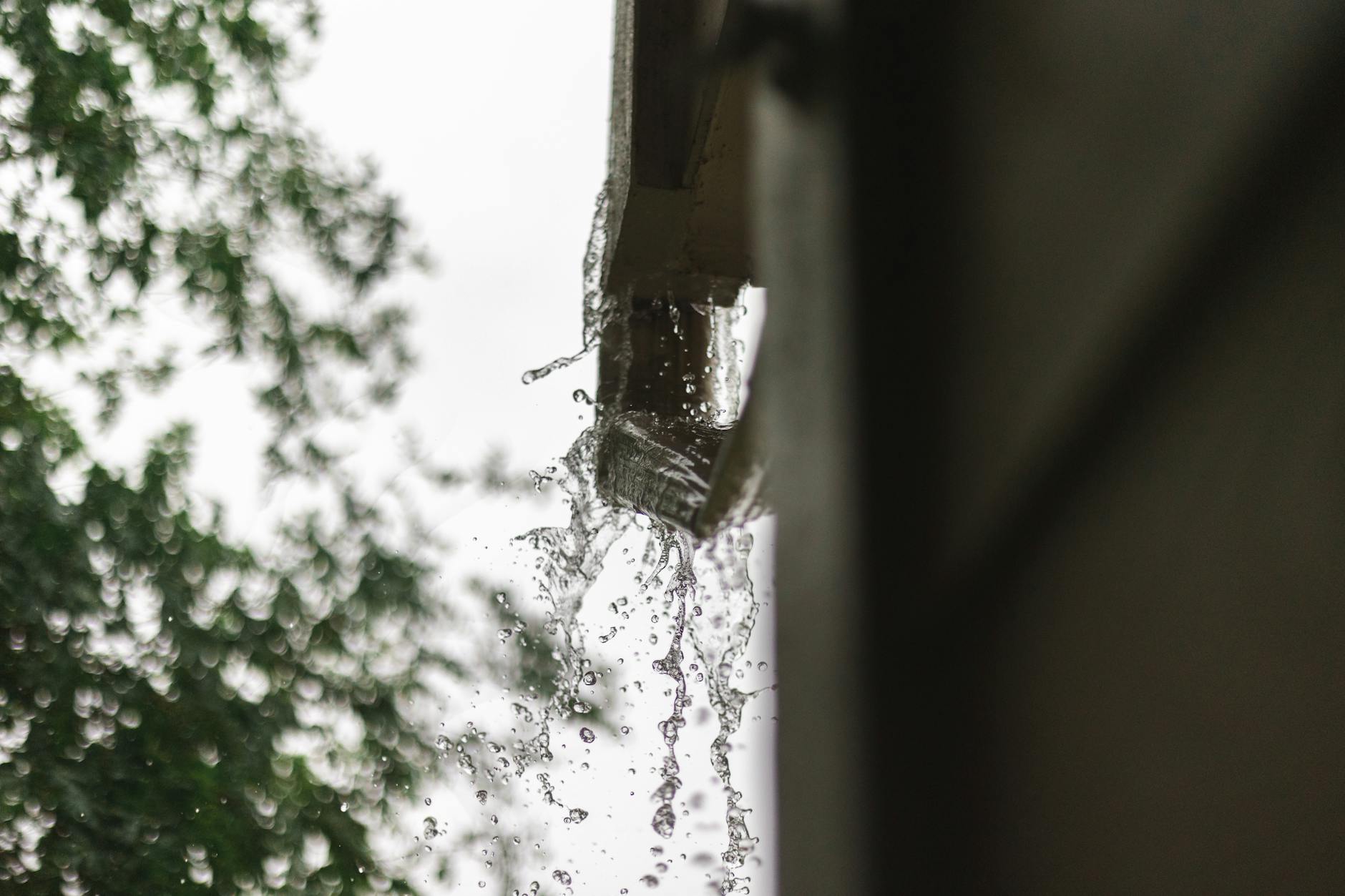
Almost nobody thinks about gutter width until the day it's obviously wrong — usually during a downpour, watching water sheet over the front edge like the gutter gave up halfway through the storm. Most homeowners just get quoted "the standard size" and move on. That's usually 5-inch, and for a lot of roofs, it's genuinely fine. For a lot of roofs in this specific part of Washington, it isn't, and the reason has less to do with the width of the metal than with how much water actually has to move through it.
What "standard" actually means
5-inch K-style is the default almost every gutter company quotes first, and it's the right call for plenty of homes — smaller roof planes, moderate pitch, average rainfall. But "standard" just means "most common," not "correctly sized for your house." Nobody measures your roof before quoting the standard size; they just quote it because it's what's on the truck.
The real difference is capacity, not just width
A 5-inch K-style gutter holds roughly 1.2 gallons of water per linear foot. A 6-inch gutter holds roughly 2.0 gallons per foot — close to 70% more. Translated into roof area, a real manufacturer sizing table built on SMACNA sheet-metal formulas rates a 5-inch gutter for roof planes up to about 2,500 square feet at a 1-inch-per-hour rain rate (level pitch), and a 6-inch gutter for up to about 3,840 square feet. (Correction: this previously cited 5,520 and 7,960 square feet for these two sizes — those numbers are real, but belong to 7-inch and 8-inch gutters, not 5-inch and 6-inch; see the oversized gutters post for the full table.) That one extra inch of width isn't cosmetic — it's the difference between a gutter that keeps up and one that's constantly a little behind.
How to actually figure out what your roof needs
The honest version of this calculation is roof square footage times a pitch factor (steeper roofs shed water faster, so they need more capacity per square foot, not less), then matched against a rainfall intensity number. That's the same basic logic behind the SMACNA sizing tables gutter fabricators use — more detail than most homeowners need, but it's why "just measure the roofline length" isn't actually how proper sizing works.
Two rules of thumb are worth knowing even if you never do the math yourself. Norm Abram, the longtime master carpenter on This Old House, uses a simple downspout guideline: roughly 1 square inch of downspout cross-section for every 100 square feet of roof area. And Tom Silva, the show's general contractor, recommends that any gutter run 60 feet or longer get at least two downspout outlets — one is rarely enough to keep water moving on a long run, no matter how wide the gutter above it is.
Here's what that looks like on an actual house. Say one roof plane feeding a single downspout is 1,200 square feet, moderate pitch. Norm Abram's rule puts you at roughly 12 square inches of downspout cross-section — a single 3x4-inch downspout (12 sq in) just barely covers it, which is why a lot of contractors will round up to the next size rather than sizing exactly to the line. Bump that same roof to a steep 10/12 pitch, and the effective drainage load goes up even though the square footage on paper didn't change, because steeper roofs shed rain faster and dump more of it into the gutter per minute. That's the piece a lot of DIY sizing guesses miss — pitch changes the answer even when the roof size doesn't.
| Roof plane size | Typical gutter | Downspout |
|---|---|---|
| Up to ~1,800 sq ft, moderate pitch | 5-inch | 2x3" or 3x4" |
| 1,800+ sq ft, or steep pitch | 6-inch | 3x4" |
| Very large or commercial-style roof | 7-inch or larger | 4x5" |
General starting point, not a substitute for measuring your actual roof and pitch — that's still worth having someone do in person.
Why South Sound rain tips the math toward 6-inch more than people expect
Here's the part most national gutter-sizing articles skip entirely: they'll tell you to check "your local rainfall," then never actually give you a number. Olympia averages about 50.6 inches of rain a year, per NOAA's 1991-2020 climate normal — genuinely high rainfall by national standards. Tacoma and the Sea-Tac corridor run lower, closer to 37 inches a year, but that's still real volume, and it's not evenly spread through a gentle drizzle all year. A commonly used rainfall-tiered sizing rule puts homes under 40 inches a year comfortably on 5-inch gutters, 40-60 inches a year into 6-inch-recommended territory, and 60+ inches a year into 6-inch-necessary territory. A lot of Thurston County sits solidly inside that middle band, and a lot of Pierce County isn't far behind it.
It's not just the total, either. Western Washington rain tends to arrive as long, steady, multi-day systems rather than short intense bursts — which sounds gentler than a thunderstorm, but it means a gutter has to sustain flow for hours at a time instead of handling one sharp peak and draining out. A 5-inch system with an undersized downspout can genuinely keep up with a 20-minute cloudburst and still lose the fight against six straight hours of steady November rain. The National Weather Service's live Olympia climatology report backs that pattern up directly — as of mid-August this water year had already logged 49.33 inches against a 47.97-inch normal, meaning Olympia was running slightly wetter than its own already-high average.
What actually happens when a gutter is a size too small
It's rarely dramatic at first. Water starts sheeting over the front lip during longer storms — not because the gutter is clogged, but because it's simply full and the downspout can't drain it fast enough to keep up. Homeowners dealing with this often describe it as overflow that happens "even right after cleaning," which is the tell that the problem is capacity, not debris. Left alone long enough, that overflow finds the fascia board, then the siding below it, and eventually the soil right next to the foundation — exactly the water path gutters exist to prevent in the first place.
Can you just add a 6-inch section, or does the whole run need to change?
Honest answer: mixing sizes on one continuous run doesn't work cleanly. Hangers, end caps, corner miters, and downspout outlets are all sized to match one gutter width, so a proper upsize means replacing that section of the run, not splicing a bigger piece into a smaller system — a 5-inch-to-6-inch transition mid-run is the gutter equivalent of one big shoe and one regular shoe. Technically wearable. Structurally a bad idea forever. The good news is you don't necessarily have to redo the whole house — if only the roof planes feeding a specific downspout are actually overwhelmed, that run can be upsized on its own while the rest of the home keeps its existing 5-inch gutters, as long as they're genuinely keeping up.
What I actually install
On a smaller, simply-shaped roof with a normal pitch, 5-inch still does the job here and there's no reason to pay more for capacity you won't use. But on anything with a decent-sized roof plane, a steeper pitch, or a run longer than about 40-50 feet, I lean toward 6-inch by default in this climate — the math above is exactly why. I don't size a job off a square-footage chart alone, either; I walk the roofline, look at the pitch, and see where the water's actually going to concentrate before I tell you what size makes sense for your specific house.
Worth saying honestly: 6-inch gutters do look a little chunkier up close, and I've had more than one homeowner hold up a sample and ask if I'm building a horse trough. From the ground, standing in your driveway, nobody's squinting at your gutter width. What they will notice, eventually, is a stain running down the siding from the one spot that couldn't keep up.
Frequently Asked Questions
Is it better to have 5-inch or 6-inch gutters? Neither is universally "better" — 6-inch handles more water and fewer outlets, but 5-inch is lighter, cheaper, and plenty for a smaller, simpler roof. It comes down to your roof's actual size, pitch, and this area's rainfall.
Do larger gutters actually make a difference? Yes — a 6-inch gutter carries close to 70% more water per linear foot than 5-inch, which matters most during long, sustained rain rather than a quick shower.
What size gutters are best for my house? It depends on your roof's square footage, pitch, and how long your gutter runs are before hitting a downspout — not a one-size-fits-all national answer.
Can I upgrade from 5-inch to 6-inch without replacing my entire system? Often yes, if only certain runs are undersized for the roof area feeding them — the whole house doesn't always need to change, but a single run needs to be replaced as a matched set, not spliced.
What's the standard rain gutter size? 5-inch K-style is the most common default nationally, but "standard" and "correctly sized for your roof" aren't always the same thing.
Do bigger roofs need bigger gutters? Generally yes — more roof area means more water funneling into the same run, and pitch matters too, since steeper roofs shed water faster than the square footage alone suggests.
Not sure which size your house actually needs? See the seamless gutter installation service or reach out for a free estimate — I'll measure your roofline and pitch in person and tell you honestly whether 5-inch is fine or 6-inch is worth it. Curious what it actually costs either way? Here's the real breakdown, and if you're also deciding on material, this covers aluminum vs. copper vs. steel for this climate.
Sources: This Old House, NOAA U.S. Climate Normals, National Weather Service Olympia, SMACNA Architectural Sheet Metal Manual, Storm Master Gutters, Regal Home Improvement, GutterFX, Team Gutters, Holda Construction.