The Best Gutter Guards for a South Sound Roofline, Ranked
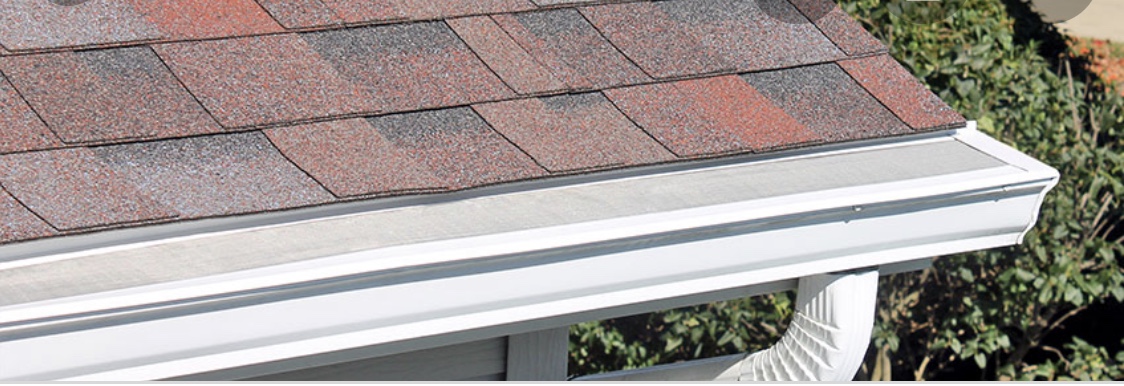
Search "best gutter guards" and you'll get forty articles that rank six products, give five of them 4.5 stars, and end with "it depends on your needs." Thanks. Very helpful. I'll be driving home now.
I install these for a living in Pierce and Thurston County, where the debris falling on your roof is fir needles, pine needles, moss, and the occasional branch that has given up on life. So this is a ranking with an actual verdict at the end, for an actual climate. If you live in Ohio under a maple, some of my reasoning flips. I'd rather be useful to the people I can actually drive to.
What are the best gutter guards for pine and fir needles?
Micro mesh is the best gutter guard type for conifer needles, and it isn't close. It's the only common style woven fine enough — roughly 50 to 275 microns — to physically stop a fir needle from entering the gutter. Perforated aluminum is a legitimate second choice. Foam inserts are the one I'd actively talk you out of.
That's the short version. Here's the long version, with the receipts.
The ranking, at a glance
Two things decide a guard's fate on a South Sound house: can it stop needles, and can it still pass water once the needles pile up on top of it? Everything else is a tiebreaker. Lifespans below are the ranges I've covered in my deeper breakdown of guard types; the heavy-rain column comes from real independent testing, which I'll get to.
| Guard type | Fir & pine needles | Heavy rain | Lifespan | Relative cost | My verdict |
|---|---|---|---|---|---|
| Micro mesh | Stops them — the only type that reliably does | Excellent at both tested intensities | 20+ yrs (stainless mesh, aluminum frame) | Mid to high | #1 — what I install |
| Perforated aluminum | Good, per one installer comparison | Not in the test data I have | Long (aluminum) | Mid | #2 — the quiet underdog |
| Reverse-curve | Mediocre — needles ride the curve right in | Fine here; measurably weak at severe intensity | 15-20 yrs | Highest | #3 — good product, wrong trees |
| Screen / standard mesh | Basically none — openings are too wide | Passes water fine | 5-10 yrs | Low | #4 — fine for maples, not for here |
| Brush | Catches big stuff, lets needles through | Can slow flow | 5-7 yrs | Low | #5 — a speed bump, not a guard |
| Foam inserts | Pores clog fast with fine debris | Degrades as it clogs | 2-5 yrs | Cheapest | #6 — I'd talk you out of it |
#1: Micro mesh — the one I actually install
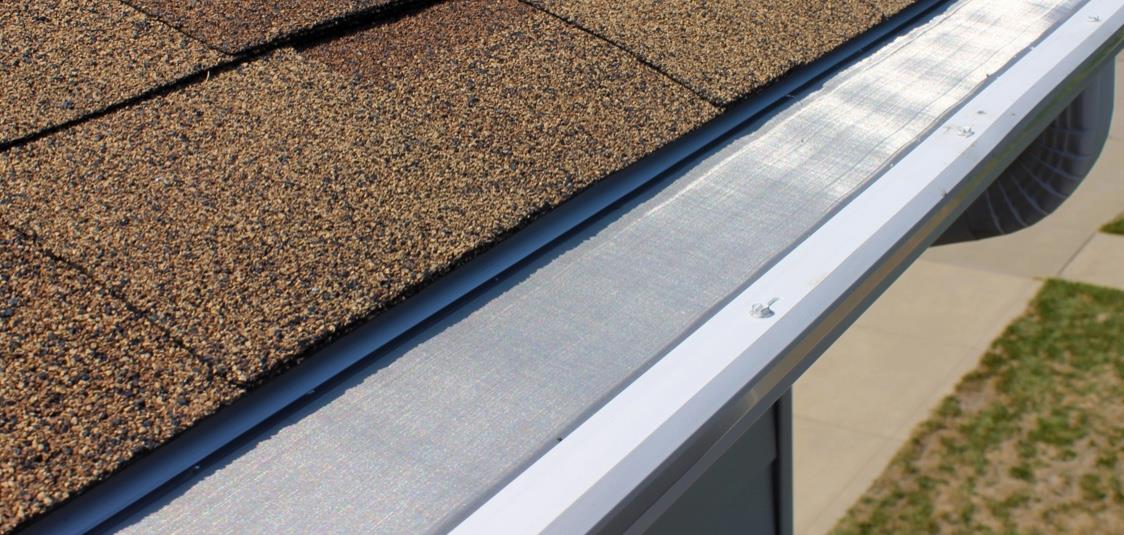
Micro mesh is stainless steel screen woven fine enough to stop sand-sized debris while still passing water. On a fir-heavy property that's the whole ballgame. A fir or pine needle is thin, waxy, and about three-quarters of an inch to an inch and a quarter long — loose, it'll slide through a standard screen guard like it was invited. Micro mesh is the one style with openings small enough to say no.
It also happens to have the best independent heavy-rain record. In Consumer Reports' 2010 test — 19 products, 10,000 gallons through a rain-simulation rig, 480 days of outdoor exposure — fine-mesh screen guards scored "Excellent" at both the heavy tier (3.5 to 4.5 inches per hour) and the severe tier (6 to 7.5 inches per hour). A professionally installed product and a DIY version both pulled it off. That's not a brochure claim; that's a lab with a hose and a grudge.
Installed, micro mesh commonly runs $8 to $28 per linear foot, with around $9/ft being a fair number for a standard system. A full-home install typically lands between $1,000 and $2,000 depending on how much roofline you've got. The heavily advertised branded systems — the ones that arrive with a salesperson, a tablet, and a financing pitch — run considerably higher, commonly $39-45+/ft. You are, to some degree, buying their television budget.
One caveat worth saying out loud: "micro mesh" describes the mesh, not the quality. A stainless mesh in an aluminum frame will outlive your mortgage. A plastic frame with aluminum mesh will not. If a quote says micro mesh, ask what the frame is made of before you ask what it costs.
#2: Perforated aluminum — the one nobody puts on these lists
Perforated aluminum is a solid panel with small punched holes rather than a woven screen. It gets almost no marketing love, which is probably why it never shows up in roundups. But a side-by-side comparison from an independent installer put perforated guards on par with — or ahead of — name-brand micro mesh in real-world debris shedding, which is more than I can say for most of the field.
I want to be straight about the strength of that evidence: it's one installer's comparison, not a controlled lab test, and I don't have Consumer Reports-grade rain data for perforated specifically. So it's my #2 on real but thinner evidence. If budget is tight and someone quotes you perforated aluminum, that's a defensible choice, not a downgrade in disguise.
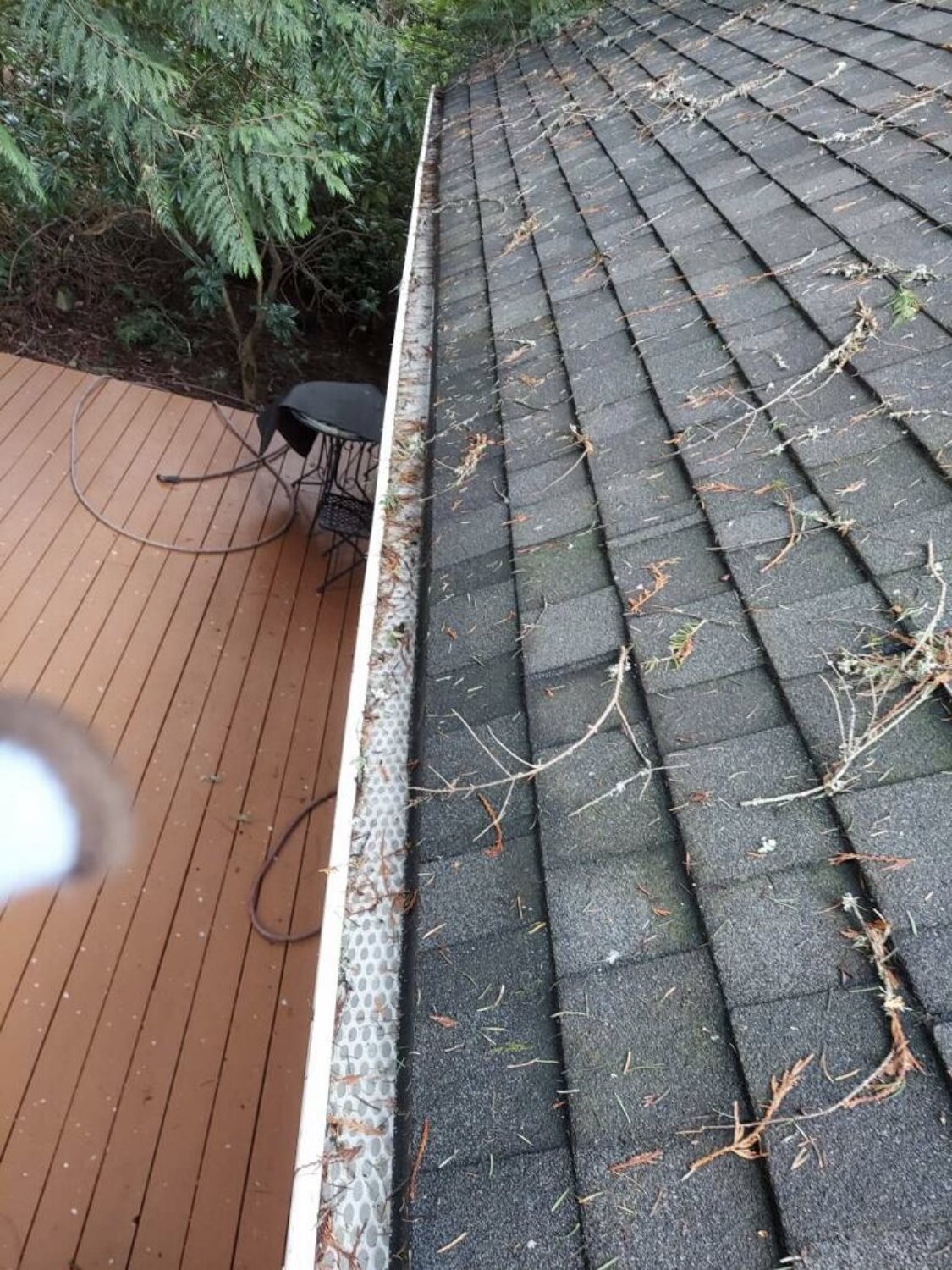
That's a real South Sound job, and it's the honest picture of what any guard is up against here: needles and moss everywhere, year-round, with no tidy autumn deadline. Nothing in that photo is a failure. That's just Tuesday.
#3: Reverse-curve — a good product that drew the wrong trees
Reverse-curve, or surface-tension, guards work by letting water cling to a curved solid nose and follow it into a narrow slot while debris keeps sliding off the edge. It's genuinely clever engineering, it lasts 15-20 years, and it's the most expensive option on the list.
Here's where I have to argue against my own instincts, because the obvious knock on reverse-curve doesn't actually apply here. In the Consumer Reports test, four surface-tension products scored "Very Good" at the heavy tier but fell to "Good" or worse at severe intensity, and one dropped all the way to "Poor." This Old House's 2026 hands-on testing found reverse-curve covers overshooting the gutter entirely in a simulated downpour. That's real, and it's damning — somewhere else. Building code rainfall tables put Seattle's 100-year, one-hour design storm at roughly 1.4 inches per hour, which is well under even the "heavy" tier. Compare Houston or Miami, closer to 4.6-4.8. I wrote a whole post on why heavy rain matters less here than the internet thinks, and I'm not going to pretend otherwise just because it would make a cleaner argument.
So why is it only #3? Trees. A reverse-curve guard is designed for debris that slides — broad flat leaves that catch the wind and keep going. A fir needle doesn't slide, it threads. It's small enough to ride the water right through the intake slot, which puts it back inside the gutter where you didn't want it. Pay the most money on the list to solve a leaf problem you don't have, and you've got an expensive roofline accessory. There's also a minor winter note: the curved nose can ice over first and seal the opening — though per my look at guards and ice dams, sustained hard freezes aren't really our pattern, and attic heat loss is the actual culprit anyway.
#4, #5, and #6: the bottom of the list
- Screen / standard mesh — the openings are sized for leaves. Against needles, a screen guard is a chain-link fence against mosquitoes. This Old House recommends screen-style guards get cleaned two to four times a year, which is roughly what you were doing before you bought one.
- Brush guards — a giant pipe cleaner in your gutter. They stop twigs and big leaves, let needles sift straight down into the bristles, and when you eventually pull one out it comes with a compost core. They also slow water flow, which is a strange thing to pay for.
- Foam inserts — the only item on this list I'd actively argue you out of, and the only one where "cheap" is also the expensive answer. A foam insert's pores clog with exactly the fine grit and needle fragments we have the most of, and the whole thing has a 2-5 year lifespan. You'll buy it twice before a micro mesh install would have needed its first real cleaning.
Which gutter guard is right for your specific house?
The honest answer sometimes is "none." I've covered the full candidacy checklist elsewhere — tree cover, story height, roof valleys, how often you're already up there, and the condition of the gutters themselves. Here's the compressed version.
| Your situation | What I'd actually tell you |
|---|---|
| Two stories, under Douglas firs, cleaning 3+ times a year | Micro mesh. This is the exact case it was built for. |
| Treed lot, real debris, budget is genuinely tight | Micro mesh if it fits, perforated aluminum if it doesn't. Not foam. |
| Single story, light tree cover, simple roofline | Skip guards. Two cleanings a year already solves this. |
| Roof valleys dumping two planes into one gutter run | Micro mesh, and size the downspouts honestly while you're at it. |
| Gutters already sagging, pulling away, or leaking at seams | Fix that first. A guard on a broken gutter is a lid on a problem. |
The one claim I won't make about any of them
No gutter guard ends gutter cleaning. Not the best one, not the most expensive one, not the one with the catchiest jingle. Debris too fine to pass through a guard doesn't evaporate out of politeness — it sits on top. Over a season or two it mats down, and water starts having opinions about it.
This isn't me being modest about a product I sell. It's documented. A class action against LeafFilter over its "never clog again" claim settled for $5.2 million in 2023 without any admission of wrongdoing. This Old House's own contractor source put it plainly: "these screens don't screen out everything... at the end of every year, there's a sludge that collects." Their real recommendation is micro-mesh systems cleaned once or twice a year, and screen-style guards two to four times — which is a genuine reduction from an open gutter, and still not zero. The full honest version lives in my post on whether guards still need cleaning.
What a good guard actually buys you is a change in the kind of work. Instead of hauling a bucket up a ladder twice a year to scoop wet needle sludge out of a trough, you're brushing a debris mat off the top of a mesh, usually once. That's a real win. It's just not the win on the flyer.
Frequently Asked Questions
What are the best gutter guards overall? For conifer-heavy climates like the South Sound, micro mesh with a stainless screen and aluminum frame. It's the only type fine enough to block fir and pine needles, and it scored "Excellent" at both heavy and severe rainfall intensity in Consumer Reports' independent testing.
Which gutter guards are the worst? Foam inserts, for this region. Their pores clog with the exact fine debris we get the most of, and they typically last only 2-5 years. Brush guards are only marginally better against needles.
Are expensive branded gutter guards worth the extra cost? Not automatically. Heavily advertised systems commonly run $39-45+/ft against roughly $8-28/ft for a standard micro mesh install. The mesh quality and frame material matter more than the brand on the van, and I have no independent data showing the premium systems outperform a well-installed standard one.
Do gutter guards work in heavy rain? Fine mesh does, at both intensities tested. Surface-tension and reverse-curve designs measurably dropped off at severe intensity in testing — though our regional design-storm rainfall sits well below the level where that showed up.
Will the best gutter guards raise my home's value? There's no independent study putting a resale dollar figure on gutter guards, and they aren't a tracked category in the industry's major ROI reports. Here's the longer honest answer.
Can I just skip guards and clean more often? Yes, and on a single-story home with light tree cover that's usually the better financial call. Guards earn their keep on tall, treed, valley-heavy rooflines.
The bottom line
If you want one sentence: on a South Sound roofline with fir or pine anywhere near it, the best gutter guards are micro mesh with a stainless screen and an aluminum frame, perforated aluminum is a fair budget alternative, and foam is a purchase you'll regret twice. Reverse-curve is a good product that simply drew the wrong trees for this zip code, and screen and brush guards are solving a leaf problem we mostly don't have.
That's the ranking. I install micro mesh on most South Sound homes because the debris here decided it for me, not because it has the best marketing. And if you've got a simple single-story roof with three shrubs and a lot of sky, I'll tell you to keep your money — I'd rather have a repeat customer than a one-time sale and a quiet grudge.
Want a straight read on your actual roofline instead of a generic list? See how gutter guard installation works here, or reach out for a free estimate — I'll look at your real trees and your real gutters before I tell you what you need. Licensed, bonded, and insured, and you'll be talking to Aaron, not a call center.
Photos are real installs from South Sound jobs, not stock. Sources: Consumer Reports (2010 gutter guard test), This Old House (guard testing, maintenance guidance, and 2026 hands-on reverse-curve test), International Plumbing Code Appendix B rainfall tables, ClassAction.org (LeafFilter settlement), Gutter Guards Direct installer comparison, HomeAdvisor cost data.