Do Micro Mesh Gutter Guards Actually Work? An Honest Answer From the Guy Who Installs Them
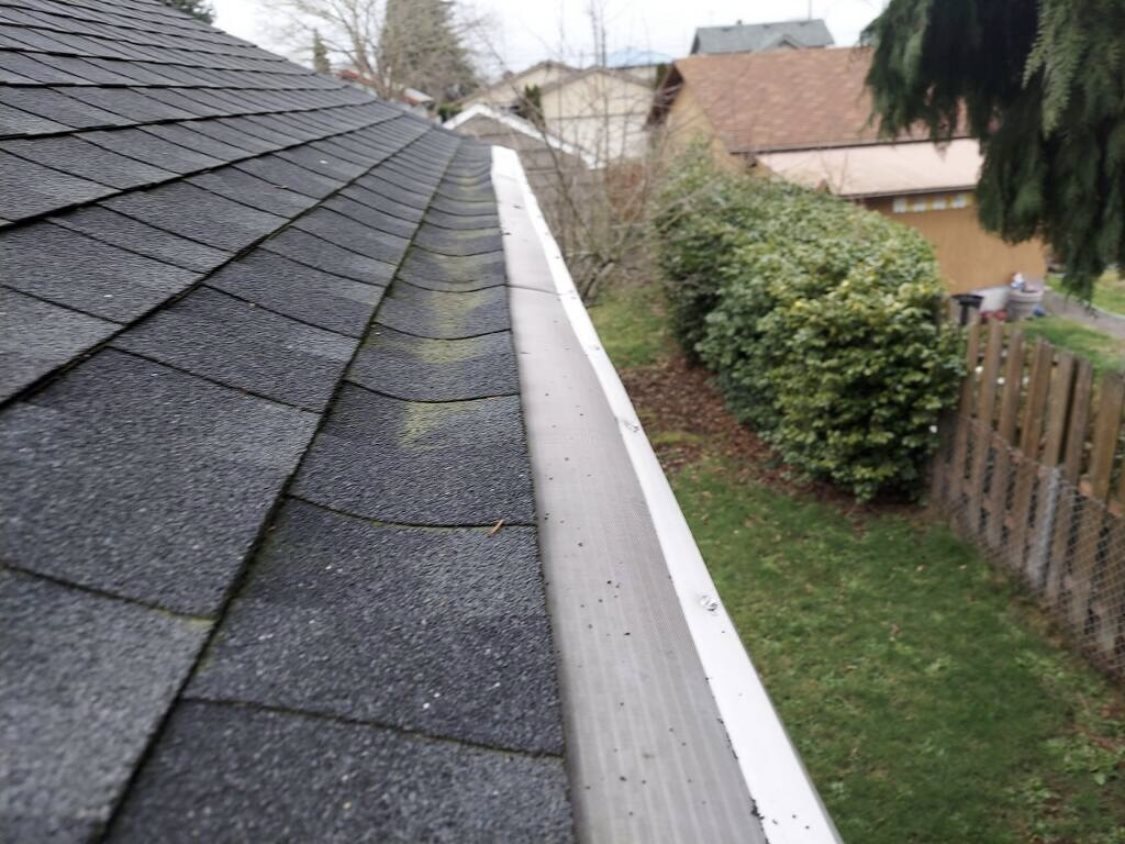
Here's the pitch you'll hear from most gutter guard companies: install this, and you'll never clean your gutters again. Here's what I'll actually tell you, standing on your roof with a mesh sample in my hand: that's not true, and the companies selling you $40-a-foot systems know it's not true. What is true is a lot more useful — and it's specific enough to your roofline that I want to walk through it properly instead of just selling you the shiny version.
I install micro mesh gutter guards regularly, and I like them. I also think you deserve the honest version of what they do, especially here in the South Sound where the debris problem is fir and pine needles and moss — not the tidy autumn maple leaves every national gutter guard article seems to be picturing.
The Problem Nobody's Marketing Page Mentions: The Clogging Paradox
Micro mesh is stainless steel screen woven fine enough — commonly in the 50 to 275 micron range — to stop grains of sand-sized debris while still letting water through. That's genuinely impressive engineering. It's also where the catch lives: debris that's too fine to pass through the mesh doesn't just bounce off and roll away. It sits on top. Fir needles, shingle grit, moss spores, seed pods — they collect on the surface of the mesh instead of falling into the gutter, and over a season or two that layer can mat down into something water has a much harder time getting through.
This isn't a defect. It's just physics doing exactly what you asked it to do. The mesh is supposed to stop fine debris — it does. The tradeoff is that "stopped" debris has to go somewhere, and "somewhere" is sitting on top of your gutter guard instead of inside your gutter.
The Six Types of Gutter Guards, and Why Most of Them Aren't Right for a Fir Roofline
- Foam inserts — cheap, but the pores clog fast. 2-5 year lifespan, honestly not worth it here.
- Brush guards — bristles catch big debris, still let a lot through, and can slow water flow. 5-7 years.
- Screen/standard mesh — larger openings, catches leaves fine, does basically nothing against needles. 5-10 years.
- Reverse-curve (surface tension) — water clings to a curved solid surface and pulls into the gutter while debris slides off the roof. Handles moderate rain fine, but real independent testing shows it's the type that actually struggles at high rainfall intensity, not just with wind-driven rain and fine debris. 15-20 years.
- Micro mesh — stainless steel screen, fine enough to actually stop needles. The only type consistently rated for conifer debris. 20+ years with a stainless mesh and aluminum frame — cheaper aluminum-mesh or plastic-frame versions won't hold up nearly as long.
- Perforated aluminum — worth a mention because it doesn't get much: a side-by-side comparison I found from an independent installer put perforated guards on par with, or ahead of, name-brand micro mesh in real-world debris shedding. It's not the flashy option, but it's a legitimate one.
For a house surrounded by fir and pine — which describes a lot of the South Sound — micro mesh is the only type on this list actually built for the debris you're dealing with. Everything else is designed around leaves.
What It Actually Costs
Installed micro mesh generally runs $8 to $28 per linear foot, with $9/ft being a fair number for a standard system. Branded systems with the heaviest ad budgets — the ones with a salesperson at your door — run considerably higher, sometimes $40+/ft once you add in the sales visit and the financing pitch. A full-home professional install is commonly $1,000 to $2,000 depending on your roofline length. DIY kits exist and run far less, but I'd only recommend that route on a single-story, walkable roof — the fall risk on a two-story install isn't worth what you'd save.
The Honest Maintenance Answer
This is the part I actually care about getting right, because it's the part that gets oversold. One national survey found that before installing guards, homeowners cleaned gutters about twice a year on average — after guards, that dropped to roughly 7% still cleaning that often. That's a real, meaningful drop. What it is not is zero. Independent testing (This Old House's ongoing program, not a manufacturer's own claims) found that even with guards installed, fine sludge and grit still accumulate at the bottom of the gutter over about a year, guard type aside.
So here's the honest version: guards don't end gutter maintenance, they change what the maintenance looks like. Instead of hauling a bucket up a ladder twice a year to scoop wet leaf sludge, you're brushing or rinsing a debris mat off the top of the mesh, usually once a year. That's a real improvement. It's just not the "never again" story on the flyer.
I'll be straight with you on one more thing, because I found it while researching this and it's too honest to leave out: a homeowner on a contractor forum, thirty-five years into home ownership and several guard systems in, said plainly that in his experience "they all work equally poorly... though some systems are worse than others." I don't fully agree — a good micro mesh system on a fir-heavy roofline is a real, measurable improvement over nothing — but I'd rather you hear that skepticism from me than get surprised by it later.
Why the South Sound Is a Different Problem Than What Most Guides Assume
Almost every gutter guard article online is written with broadleaf trees in mind — maples, oaks, that satisfying autumn leaf-fall. That's not our problem here. Fir and pine needles are thin, waxy, and about three-quarters of an inch to an inch and a quarter long. Loose, they'll slide through a standard screen guard without slowing down. But they don't stay loose — they interlock into dense mats, the same way a pile of toothpicks tangles instead of stacking. Add our nearly year-round rain, and those mats stay damp long enough to start growing moss right at the roofline, which is its own separate problem on top of the clog.
Micro mesh is the one guard type actually fine enough to stop needles from getting into the gutter in the first place. It won't stop them from matting on top — nothing does that completely — but it moves the mess from "inside your gutter system" to "a surface you can brush off once a year," which is a meaningfully easier problem to have.
Is It Actually Worth It?
For a lot of South Sound homes surrounded by conifers, yes — with realistic expectations. If you're picturing zero maintenance forever, no guard on the market delivers that, and I'd rather tell you that now than have you feel sold to later. If you're picturing "climbing a ladder twice a year" turning into "checking it once a year, usually from the ground," that's a fair and accurate expectation for a properly installed micro mesh system on this kind of roofline.
It's a better fit for some homes than others. A single-story ranch under two maples is a different decision than a two-story colonial under a stand of Douglas firs. I'd rather look at your actual roofline than tell you a blanket yes or no.
Frequently Asked Questions
Do micro mesh gutter guards stop pine and fir needles? Yes — better than any other guard type. They're the only style fine enough to reliably block needles from entering the gutter itself.
Will I never have to clean my gutters again? No, and be skeptical of anyone who tells you that. Expect a real drop in frequency — often to about once a year — not zero.
How much do micro mesh gutter guards cost installed? Commonly $8-28 per linear foot depending on the system, with heavily-advertised branded options running well above that.
Can I install gutter guards myself? On a single-story, easily walkable roof, sure. On a two-story or steep roofline, I'd rather you call someone with the right ladder setup than risk it.
Do gutter guards work with existing gutters, or do I need gutter repairs first? Guards install onto your existing gutter, but if the gutter itself is sagging, pulling away, or already damaged, that needs fixing first — a guard on a broken gutter just hides the problem instead of solving it.
The Bottom Line
Micro mesh gutter guards are a real, worthwhile upgrade for a lot of South Sound homes — especially anywhere fir or pine needles are the main debris problem. They're not a magic "never clean again" fix, and I'd rather tell you that honestly than have you find out the hard way after paying for one. Between guards and regular gutter cleaning, most homes land on a system that actually holds up through a South Sound winter without turning into a once-a-year ladder emergency.
Want an honest read on whether guards make sense for your specific roofline? Reach out for a free estimate — I'll look at your actual trees and your actual gutters before I tell you what you need. Wondering if it's worth it beyond just cleaning? Here's the honest answer on resale value.
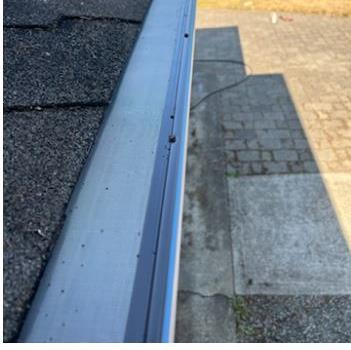
Photos are real installs from South Sound jobs, not stock. Sources: This Old House gutter guard testing and 2025 homeowner survey, NC State Extension (Dr. Bill Hunt), Consumer Reports 2010 gutter guard test, HomeAdvisor and This Old House cost data, Gutter Guards Direct installer comparison, and homeowner forum discussions on Houzz.