How to Maintain Gutters at Home: A Real Maintenance Checklist
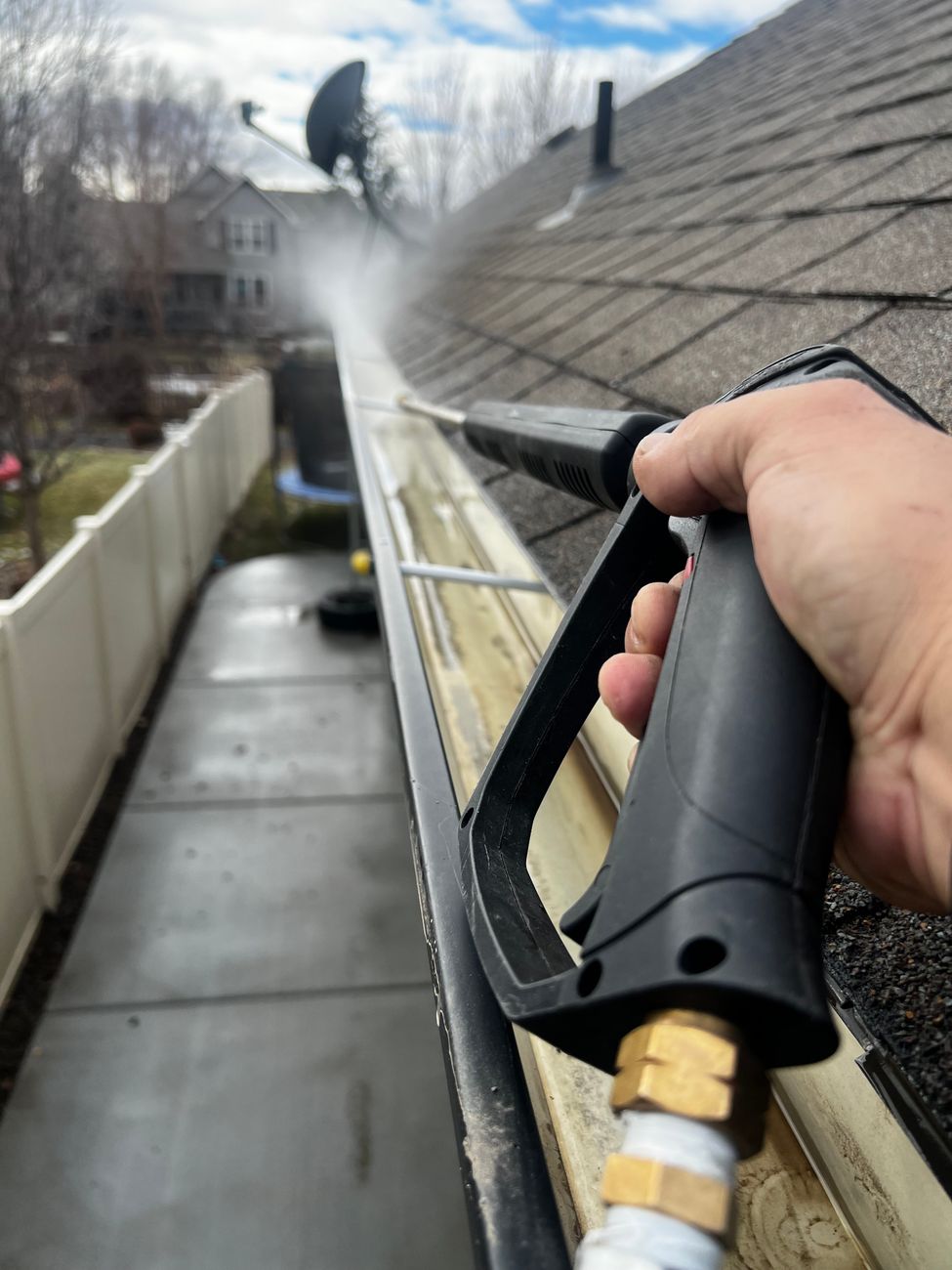
I've already covered what cleaning costs and what tools actually work. Neither answers the question I get asked most on a first call, which is simpler: how to maintain gutters at home so it never turns into a bigger job. That's a schedule and a checklist, not a price tag or a shopping list. Here's the actual routine — what to inspect, how often, and what changes by season.
The Real Schedule Behind Gutter Cleaning and Maintenance
Twice a year — spring and fall — is the standard baseline almost every trade source agrees on. But "clean it" and "maintain it" aren't quite the same task. Cleaning removes debris; maintenance checks whether the system underneath is still doing its job — hangers, slope, seams, the whole run. On a lot with mature firs, pines, or cedars overhead, needle drop runs closer to year-round than seasonal, so three to four checks a year is the more honest number. Fall is consistently the highest-priority visit, since it's the last look before winter rain volume peaks.
What an Actual Inspection Covers
A real inspection is more than a glance from the driveway. This is what I'm actually checking on every visit:
- Hangers and fasteners: spaced no more than about 2 feet apart, tight against the fascia, and ideally screws rather than the older spike-style fasteners that work loose over time
- Slope: a real, consistent pitch toward the downspout — roughly 1/4 inch of drop for every 10 feet of run — not just a line that looks level from the ground
- Seams and end caps: checked for gaps, failed sealant, or a drip point that shows up in the same spot every time it rains
- Downspout flow: run water through with a hose and confirm it actually exits at the bottom instead of backing up partway down; extensions should carry water at least 4-6 feet away from the foundation
- Fascia condition: soft, spongy, or stained wood behind the gutter means moisture has already gotten in, and it's often further along than it looks from below
- Debris load relative to tree coverage: a bare gutter under an oak needs a different schedule than one sitting under a stand of conifers
Spring and Fall, Side by Side
Spring is about confirming the system survived winter intact — hangers pulled loose under wet debris, sections that sagged or pooled water, any new gap at a seam. It's also the easiest time to spot standing water, since a gutter still holding a puddle a day after rain has a slope or blockage problem debris removal alone won't fix. Fall is the higher-stakes visit: clear everything out before winter rain volume peaks, not just the top layer of leaves. Compacted debris at the bottom of a run is what people miss — invisible from the ground, and exactly what causes a downspout to back up mid-storm. Confirm downspout extensions are still pointed away from the foundation while you're at it; a mower or a curious dog knocks them loose more often than you'd think.
Why the Importance of Gutter Maintenance Isn't Overstated
It's tempting to treat this as a cosmetic chore, but the failure path is well documented. Standing debris traps moisture against the gutter and the fascia behind it; wood that stays wet long enough softens and rots, and soft fascia can't hold hangers securely anymore. Separately, water damage and freezing claims made up 27.6% of homeowners insurance property claims in 2022, according to the Insurance Information Institute — the second-largest category behind wind and hail, averaging around $13,954 per claim. InterNACHI's inspection standards describe the mechanism: overflow saturating soil against the foundation, building hydrostatic pressure, and eventually showing up as basement dampness or mold. On ice dams, I'll be straight the same way I am on every other post: building-science research points to attic heat loss as the real cause, not clogged gutters — but a clogged gutter gives meltwater fewer places to go once a dam has started, making a bad situation worse rather than causing it.
A Few More Gutter Maintenance Tips
The routine above covers the checklist; these are the small habits that make it easier. Do the inspection right after cleaning, not as a separate trip — you're already up there. Keep a simple log of what you find each visit, since a hanger that was fine in spring but loose in fall tells you something a one-time look never will. And if your gutters are single-story and the debris is light, a seasonal check is a reasonable weekend task — see the tool breakdown for what ground-level equipment actually handles, or the real pricing if you'd rather hire it out. Once a gutter shows sagging, a persistent leak, soft fascia, or debris that's clearly sat for more than a season, that's a repair conversation, not a cleaning one.
Frequently Asked Questions
How often should I maintain my gutters at home? Twice a year at minimum — spring and fall — with homes under heavy conifer cover often needing three to four checks a year since needle drop isn't seasonal the way leaf drop is.
What's the difference between gutter cleaning and gutter maintenance? Cleaning removes debris. Maintenance checks the system underneath it — hangers, slope, seams, downspout flow, and fascia condition — since a clean gutter can still have a slope or hardware problem debris removal won't fix.
What roof gutter maintenance tasks do people actually skip? Checking downspout flow with a hose and inspecting the fascia board behind the gutter. Both take a few extra minutes and both catch problems before they become expensive ones.
Can I do this myself, or should I hire a pro? A single-story home with light, accessible debris is a reasonable DIY job. Sagging sections, soft fascia, persistent leaks, or a two-story roofline are worth a professional look instead of a guess.
Ready to have someone check the whole system instead of just guessing? See the gutter repair & maintenance service or reach out for a free estimate — I'll walk the roofline, tell you honestly what's holding up and what isn't, and fix what actually needs it.
Sources: Insurance Information Institute, InterNACHI, Building Science Corporation, This Old House, Angi, American Hill Country Gutters.