Signs Your Gutters Are Clogged (And What Each One Actually Means)
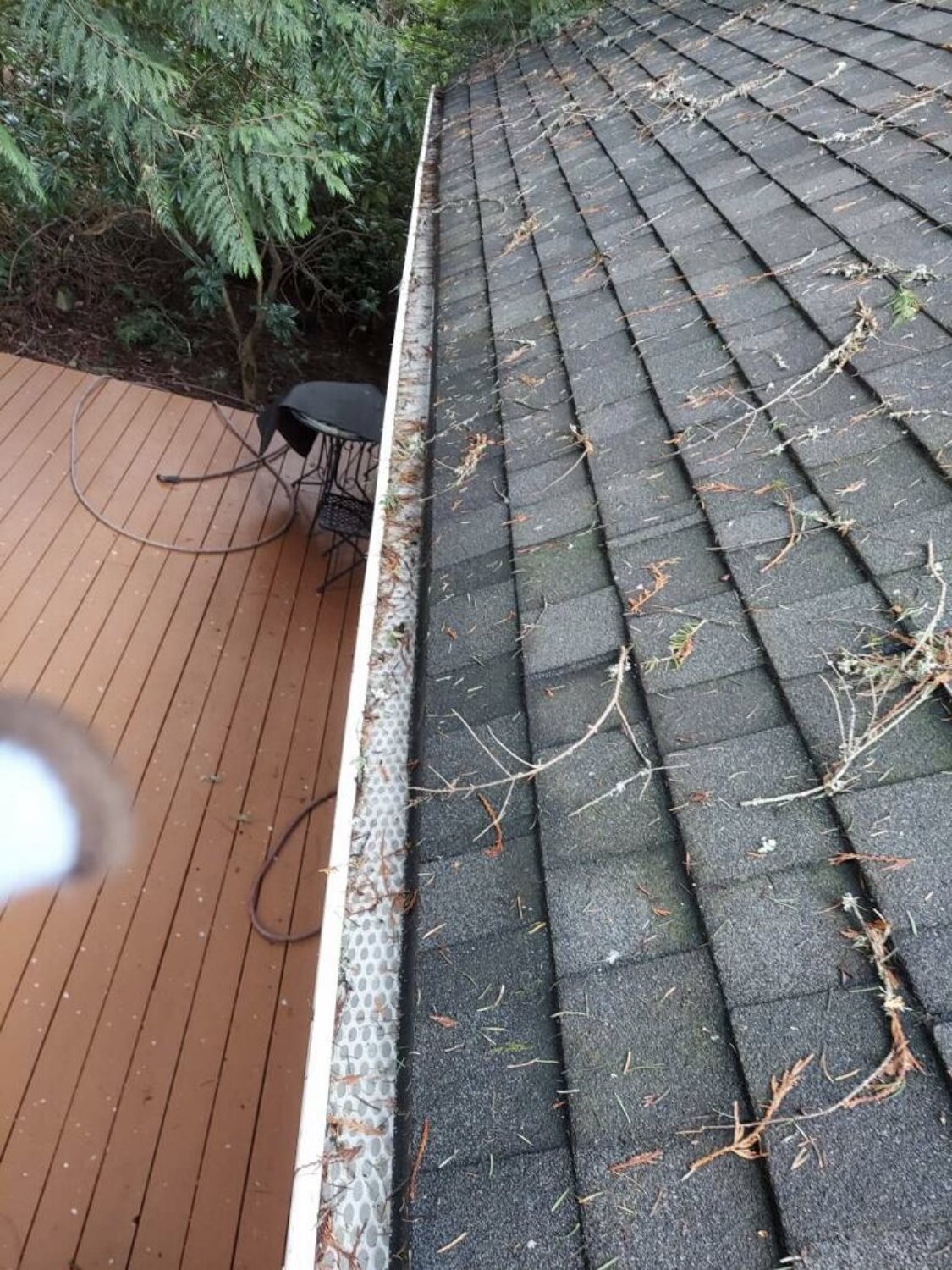
Most gutter clogs don't announce themselves. There's no alarm, no dramatic moment — just a slow accumulation of needles and grit until the system quietly stops doing its job. Every list of "signs of clogged gutters" online reads about the same: overflow, sagging, stains, plants, pests. What most of them skip is the part that actually matters — which of those signs is a minor early warning, and which one means stop reading this and go check your basement.
Water spilling over the sides
This is the sign almost everyone notices first, and it's also the most misdiagnosed. Overflow during a storm doesn't always mean the gutter is clogged — sometimes it's just undersized for the roof feeding it. But if the overflow happens at a specific spot every time, rather than along the whole run, that's usually debris sitting right at that point, blocking the water's path to the downspout. The water has to go somewhere, and "over the front lip" is the only option left once the trough itself is full.
Sagging, pulling away, or collapsing sections
A clean, empty gutter weighs almost nothing. Pack it with wet debris and standing water, and a single 20-foot run can hold real weight — enough, over time, to pull hangers loose from the fascia board. Once one hanger lets go, the section on either side of it takes on more load, which is why sagging tends to spread rather than stay contained to one spot once it starts.
Stains on the siding, mildew, or rust streaks
This one has a specific mechanical cause worth understanding, because it explains why the stain always shows up in the same place. When a clog forces water to overflow or seep behind the gutter instead of through the downspout, that water runs down against the fascia board in a spot that's sheltered from sun and wind — unlike normal splash-back, which dries quickly. Chronic dampness in one sheltered spot breaks down the paint seal, the wood underneath swells and softens, and rot sets in. Left long enough, that's the mechanism that eventually lets a whole gutter section detach from the house — not the debris itself, but the wood behind it failing first.
Plants sprouting out of the gutter
The most visually obvious sign, and usually one of the earliest. Wet, decomposing debris sitting in a trough is functionally a planter box — enough organic material and standing moisture for windblown seeds to actually take root. It looks almost comical from the ground, but it's a reliable marker that whatever's up there has been sitting long enough to start breaking down.
Birds, squirrels, and other uninvited tenants
A gutter packed with dry debris makes a genuinely appealing nesting spot — sheltered, insulated, and usually undisturbed. If you're noticing birds or squirrels spending more time at roofline than usual, it's worth a look; they're not there for the view.
The one sign that means stop and call someone: water inside the house
Everything above is a warning sign worth addressing on a normal timeline. This one isn't. Overflow that's been happening long enough eventually saturates the soil right against the foundation, and repeated saturation builds hydrostatic pressure against the foundation wall — pressure that, cycle after cycle, finds its way through cracks and joints. InterNACHI's inspection standards flag exactly this mechanism: gutter overflow saturating soil near the foundation, wicking through the wall, and showing up as interior dampness, mold, or wood rot. Matt Wojciechowski, a district service manager at the foundation-repair company Groundworks, put the warning sign plainly: "If you find your foundation walls are constantly damp or wet, chances are water is seeping through." A damp basement wall or a soggy patch on a ceiling after a storm isn't a maintenance item anymore — it's active water intrusion, and it's worth acting on immediately rather than waiting for the next dry stretch to deal with it.
This isn't a small-scale problem industry-wide, either. Water damage and freezing claims made up 27.6% of all homeowners insurance property claims in 2022, according to the Insurance Information Institute — the second-largest category behind wind and hail — with an average claim cost of $13,954 and roughly 1 in 60 insured homes filing one in a given year. Gutters obviously aren't the cause of every one of those claims, but a system that's supposed to move water away from the house and isn't doing that job is squarely in the category insurers are talking about.
Why this happens faster here than the "leaves" advice everywhere else
Almost every national gutter-clog article talks about "leaves" as the generic culprit. That's not quite the right picture for a fir-and-pine-heavy region like this one. Broadleaf trees dump their debris in one concentrated fall season; conifers shed needles nearly year-round, so there's no single "clean it once and you're done" window the way there is elsewhere. Needles are also narrow and flexible enough to slip through standard gutter guard mesh that stops broad leaves just fine, and on a roof with valleys, two separate roof planes' worth of needle debris can funnel into a single gutter run. None of that means guards are useless here — it means the debris pattern is genuinely different from what most gutter-clog content assumes, and "twice a year, like the national guides say" is often not often enough on a heavily treed South Sound lot.
A quick, honest note on ice dams
A lot of gutter-clog articles lean hard on ice dams as a scare point. Worth being straight about this one: building-science research, including guidance from the University of Minnesota Extension and Building Science Corporation, is clear that ice dams are primarily caused by uneven roof deck temperatures from attic heat loss — not by clogged gutters. What a clogged gutter does is give meltwater fewer places to escape once a dam has already started forming, making a bad situation slightly worse rather than causing it outright. Western Washington's winters are mild enough that this is a smaller concern here than it is in colder climates — worth knowing about, not worth losing sleep over.
How often to actually check
Twice a year is the standard national advice, and it's a reasonable baseline for a home with little tree cover. On a lot with mature firs or pines overhead, checking closer to seasonally — especially after any significant windstorm — catches problems while they're still a "plants sprouting" situation instead of a "damp basement wall" situation. You don't need to inspect every week; you need to look before a clog has had months to compact and settle.
What I actually see most on service calls
Overflow and sagging are the two signs that get someone to finally call, but by the time either one is visible from the ground, there's usually already a solid, compacted mat of needles sitting in the trough — not a light dusting. The stains and the fascia damage tend to be further along than homeowners expect once I'm actually up there looking. If it's just starting to look full, that's the easy visit. If there's already staining on the siding below the gutter line, that's worth a real look at the fascia while we're up there, not just a cleaning.
Frequently Asked Questions
What are the signs of clogged gutters? Overflow at a specific spot, sagging or pulling-away sections, siding stains or mildew below the gutter line, plants growing in the trough, and increased bird or pest activity at the roofline. Water showing up inside the house is the most serious sign of all.
Can clogged gutters actually damage my house? Yes — the mechanism runs from overflow, to chronic dampness against the fascia, to wood rot, and separately, to soil saturation against the foundation that can eventually let water into the basement or crawlspace.
How often should I check my gutters? Twice a year is standard advice for most homes; on a heavily treed lot with conifers overhead, checking closer to seasonally — and after any big windstorm — catches problems earlier.
Can I tell if my gutters are clogged from the ground? Sometimes — overflow, sagging, and staining are all visible from the ground. Plant growth and pest activity, and how compacted the debris actually is, usually require getting up there to see clearly.
Do clogged gutters cause ice dams? Not primarily — building science points to attic heat loss and uneven roof temperatures as the real cause. A clogged gutter can make an ice dam that's already forming slightly worse, but it's not the root cause, and it's a smaller concern in this region's mild winters than colder climates.
Is this something to handle myself or call a professional? A light, accessible clog on a single-story home is a reasonable DIY job with the right safety setup. Compacted debris, a two-story roofline, or any sign of fascia damage or interior water is worth a professional look — see how a clog actually turns into a ceiling leak if you're seeing signs of interior water.
Noticing overflow, sagging, or stains below your gutter line? See the gutter repair & maintenance service or reach out for a free estimate — I'll get up there, clear it out, and tell you honestly whether it's a simple cleaning or something more. If it's been a while, here's the full gutter cleaning service. Getting ready to sell? Here's what a home inspector actually flags on gutters and the roofline around them.
Sources: Insurance Information Institute, InterNACHI, This Old House, University of Minnesota Extension, Building Science Corporation, Ned Stevens, LeafFilter, Guardian Roofing.