Rain Gutters and Downspouts: How They Work Together to Protect Your Home

Rain gutters get most of the attention, but they can't do their job without downspouts. The gutter's only role is to catch water running off the roof — the downspout is what actually carries that water safely away from the foundation. When either piece isn't working right, the whole system falls short, and that's usually when homeowners start noticing problems.
Why Downspouts Matter Just as Much as the Gutters
A lot of homeowners ask why houses need gutters at all, and the honest answer is water management. Without a way to catch and redirect roof runoff, water pours straight down next to the foundation, wears away landscaping, and eventually finds its way into a basement or crawl space. Gutters solve half of that problem by collecting the water. Downspouts solve the other half by getting it away from the house entirely, ideally with an extension or splash guard at the base.
Common Downspout Problems
- Clogs from leaves and debris that build up at the elbow joints or where the downspout meets the ground
- Disconnected or loose sections that let water dump straight down the siding instead of away from the house
- Undersized downspouts that can't keep up during heavy rain, causing water to back up and overflow the gutter itself
- Missing extensions or splash guards, which means water still lands right next to the foundation even after making it through the system
Any one of these can undo the protection the whole gutter system is supposed to provide.

Getting the Sizing and Materials Right
Not every home needs the same setup. Roof size, pitch, and rainfall in the area all affect how much water the gutters and downspouts need to move. Larger rain gutters paired with properly sized downspouts handle heavy runoff far better than an undersized system straining to keep up. Aluminum is the most common material for both because it holds up well, resists rust, and doesn't add much weight to the fascia.
DIY vs. Professional Installation
Plenty of homeowners ask whether they can install downspouts themselves, and simple fixes — reattaching a loose section or clearing a clog — are often manageable on your own. But installing rain gutters and downspouts correctly means getting the slope right, sizing the downspouts to the roof area, and making sure everything is fastened securely enough to hold up in a storm. Get any one of those wrong and water ends up right back where it shouldn't be.
Keeping the System Working
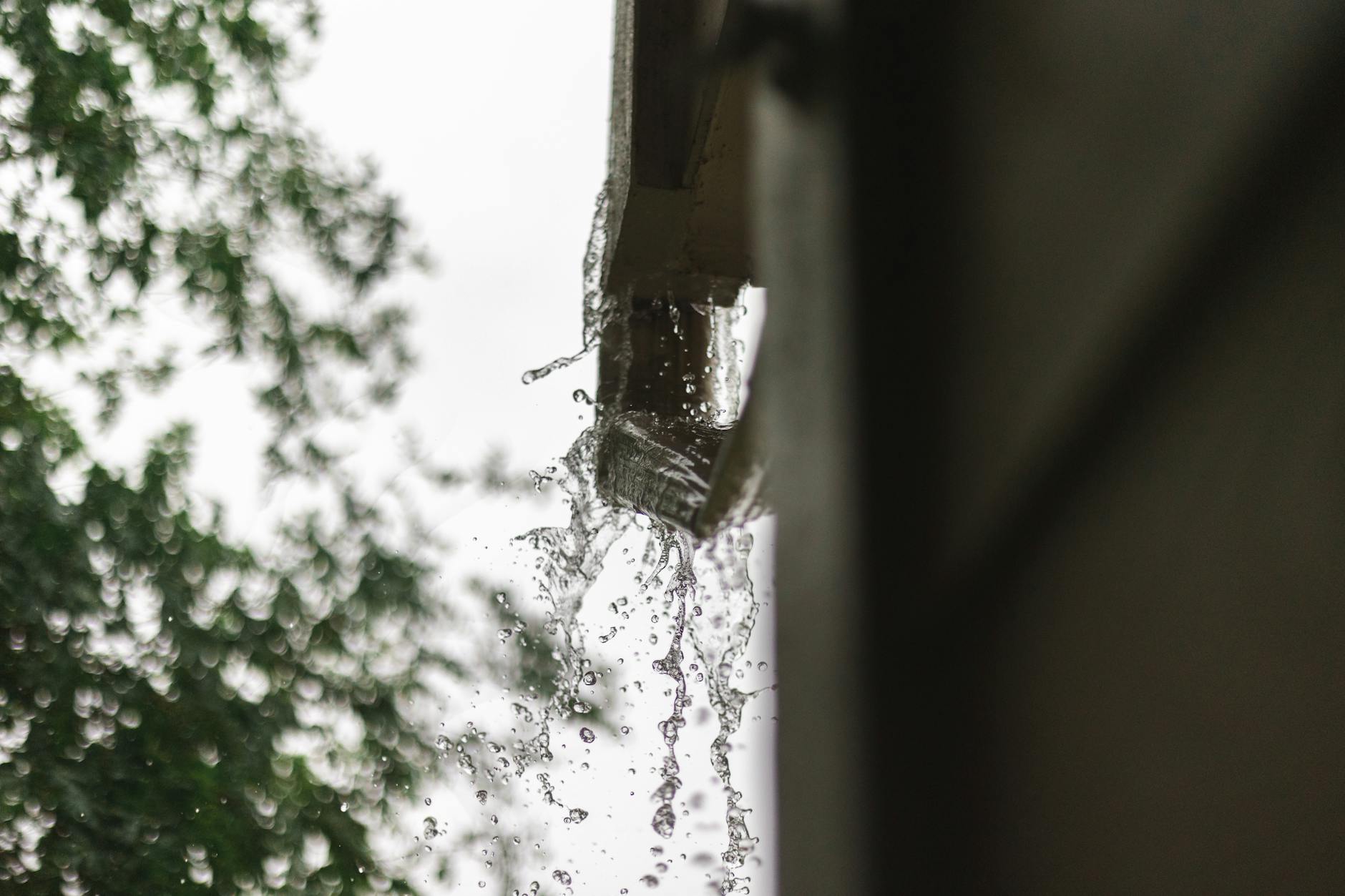
Cleaning gutters from the ground with an extension tool can handle light debris, but downspouts often need a closer look, especially at the elbows where clogs tend to collect. A quick inspection after a heavy storm is the easiest way to catch a leaking joint or a disconnected section before it turns into water damage.
Aaron's Elite Gutters installs and repairs complete gutter and downspout systems sized right for your home, not just whatever fits off the shelf. Reach out for a free estimate and a straight answer about what your roofline actually needs.
Photos sourced from Pexels.