Why Your Gutter Is Doing a Waterfall Impression (And How a Splash Guard Fixes It)
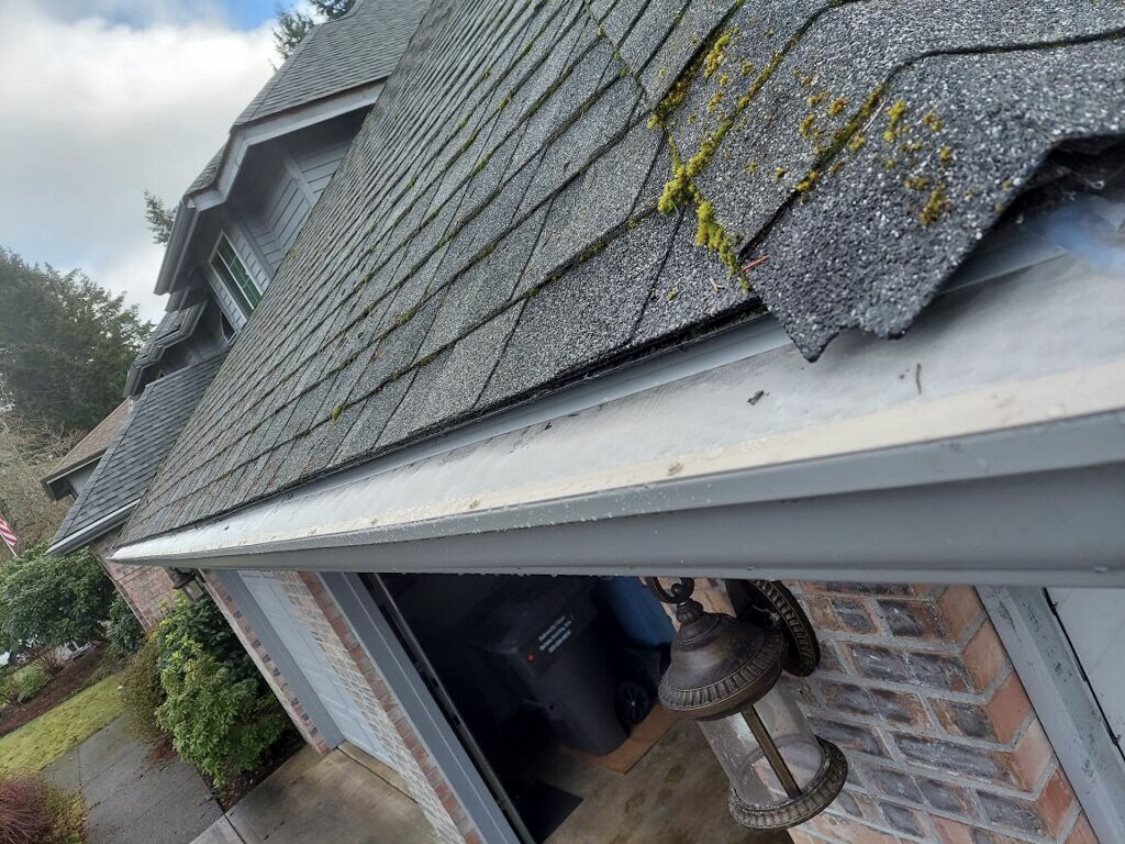
Somewhere on your roof, right now, there is a spot where two roof planes meet in a little valley — and every time it rains hard, that valley turns into a firehose aimed directly at one unlucky six-inch stretch of your gutter. The gutter, being a reasonable and hardworking piece of aluminum, does its best. It is simply not built to catch a firehose. So it doesn't. The water leaps the edge, sails past the gutter entirely, and lands wherever gravity feels like putting it — your flower bed, your front step, or directly onto the one part of your foundation you'd most like to keep dry.
This is not a clogged-gutter problem. I want to say that twice, because homeowners diagnose it wrong constantly: this is not a clogged-gutter problem. You can have the cleanest, most pristine, freshly-hosed-out gutters in the South Sound and still watch water leap clean over the top during a real downpour. The fix isn't a bigger scoop. It's a splash guard — a small, unglamorous, extremely effective piece of metal that nobody thinks about until the day their landscaping starts eroding in a very specific, very annoying spot.
What Is a Gutter Splash Guard, Actually?
A splash guard is a short raised piece — usually aluminum or steel — that clips or screws onto the front lip of your gutter at exactly the spot where water is overshooting. Think of it as a small dam for a very specific, very local flood. It doesn't fix your whole gutter system. It doesn't need to. It just stands guard at the one corner that's been quietly ruining your Saturday every time it storms.
They typically run three to five inches tall and fifteen to thirty inches long, in either a straight run (for the middle of a gutter) or a bent, mitered shape (for inside corners). Pricing in the wild ranges from about $13 for a basic steel piece up to $30 for a pair of nicer pre-finished aluminum ones with the screws included — which, for the record, is less than what most people spend on the coffee they drink while standing outside frowning at their gutters during a storm.
Splash Guard vs. Splash Block: Please, Let's Clear This Up
Every single article I researched for this post muddles this distinction, so let's just fix it here and now. A splash guard lives up on the gutter itself, at the corner or valley, and stops water from leaving the gutter in the first place. A splash block lives down on the ground, under your downspout, and directs water that's already made it through the system safely away from your foundation. One stops an overflow. The other manages a controlled release. You can absolutely need both, and no, that is not a sales pitch — it's just how water behaves when you give it two different jobs to do.
The Two Ways Your Gutter Betrays You
After digging through a genuinely unreasonable number of contractor forums, DIY videos, and homeowner complaints for this post, one thing became obvious: overflow happens in two distinct spots, and they're not the same problem wearing a trench coat.
- Roof valleys — where two roof sections meet and funnel two entire planes of water into one narrow channel. One contractor estimated a single 1,000-square-foot roof section can send over 600 gallons an hour into a valley during a moderate storm. Six hundred gallons. Into six inches of gutter. It was never going to end well.
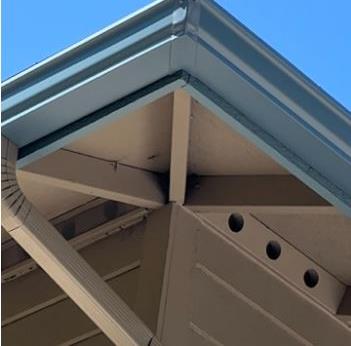
- Inside corners (miters) — where the gutter itself turns a 90-degree corner and water traveling at speed simply can't make the turn, the way you can't take a corner at full speed in a shopping cart with one bad wheel.
Homeowners on forums almost never say "overflow." They say the water "shoots," "leaps," or "flumes" — which, honestly, is more accurate than the boring technical term. One homeowner described their metal roof valley as forming "a flume" during heavy rain. Another watched water "leap over the 90-degree angle in the gutter and land on the front step." That's not a maintenance issue. That's basic hydraulics losing a fight with basic geometry.
Why This Actually Matters (The Expensive Part)
Here's the part where I stop being funny for a paragraph, because the numbers are genuinely worth your attention. Water damage and freezing claims made up 27.6% of all homeowners insurance claims in 2022, with an average payout of just under $14,000. Separately, a national survey found roughly 4 in 10 homeowners report their home has already sustained real damage — leaks, basement flooding, foundation issues — traced back to clogged or poorly managed gutters. One inch of standing water in a home can cause up to $25,000 in damage, according to FEMA. A splash guard costs less than a large pizza.
I'm not saying your overflowing corner is definitely about to cost you $14,000. I'm saying that water finds the cheapest way to become somebody's expensive problem, and a fifteen-dollar piece of aluminum is a genuinely absurd bargain compared to what happens if that corner keeps dumping water next to your foundation for another five Pacific Northwest winters.
Do You Actually Need One? Here's How to Tell
- Water visibly sheets over the gutter edge during hard rain, at the same spot every time — not randomly, the same spot
- Landscaping, mulch, or gravel is eroding in one specific area below the roofline, like something's been power-washing it on a schedule
- You've already ruled out clogs — you cleaned the gutters, checked again mid-storm, and it's still happening
- Your home has a roof valley or an inside corner feeding into a shorter run of gutter than the water volume really deserves
- Siding or fascia near one corner stays damp longer than the rest of the house, or shows staining
One home inspector I found on the record put it simply: pitch and drainage problems show up as standing water that "will freeze in the colder months" — and while freezing isn't our biggest worry here in the South Sound, standing water finding its way behind fascia boards absolutely is.
DIY or Call Someone?
Installing a straight splash guard is a genuinely reasonable DIY job — clean the spot, position it, screw it down, done in about fifteen minutes. One contractor on a builder's forum described making his own out of a small bent piece of flashing "that slides under the valley and turns the water so it runs into the gutter," which is either resourceful or the most contractor sentence ever written, possibly both.
Where it gets less DIY-friendly: inside corners and valleys often need a custom-bent piece cut to your exact gutter profile, not a generic one screwed on and hoped for. And if you're getting up on a two-story roofline to do it, that's less "weekend project" and more "please let the guy with the actual ladder rack handle this one." A gutter guard expert I found on record was refreshingly blunt about the DIY gutter-accessory industry in general: "Almost all of them fail," he said of certain gutter guard designs — which is exactly why I'd rather tell you honestly what does and doesn't work than sell you the wrong thing because it's shiny.
What It's Made Of (And Why the Cheap Ones Fail)
Splash guards show up in a few materials, and the difference matters more than the price tag suggests:
- Aluminum (.018"-.032" gauge) — the standard, matches most gutter systems, comes pre-finished in a dozen-plus colors so it actually blends in instead of looking like a Band-Aid
- 24-gauge steel — heavier duty, holds up better under real force, worth it on a valley moving serious water volume
- Concrete splash blocks (for the ground-level cousin, not the gutter-mounted guard) — these run anywhere from about 25 to over 200 pounds depending on size, and yes, the weight is the point. A block that blows around in the wind isn't protecting anything.
Why This Is a Bigger Deal Here Than in a Lot of Places
Tacoma averages about 41 inches of rain a year across roughly 156 days of precipitation. Olympia averages more — over 50 inches across 163 days. That's not the occasional dramatic thunderstorm this problem is usually described around online; that's a genuinely long, wet season putting repeated, sustained pressure on the exact same corner of your gutter, week after week, month after month. A splash guard that has to survive one bad storm in Arizona has a very different job than one that has to survive a South Sound winter.
One upside of our climate, for what it's worth: a lot of national splash-guard advice includes warnings about ice damming and snow load cracking roof-mounted deflectors. That's much less of a concern around here — we get rain, not the freeze-thaw cycles that make ice dams a real threat further inland or at elevation. So if you've read a splash guard guide written for the Midwest and it scared you off, that specific worry mostly doesn't apply to a South Sound roofline.
Frequently Asked Questions
Do gutter splash guards actually work? Yes, for the specific problem they're built for — water leaving the gutter at one corner or valley. They won't fix a clog, a poorly sloped gutter, or an undersized downspout, so if your problem is somewhere else, this specific fix won't touch it.
Are they necessary for every house? No. If your roofline is simple — no valleys, no sharp inside corners — you may never need one. If you have a roof valley dumping onto a short gutter run, it's less "maybe" and more "when."
Can I install one myself? A straight guard, usually yes. A custom-bent piece for a tricky valley or a two-story install, that's where I'd rather come take a look than have you improvising with flashing on a ladder.
How often do they need maintenance? Basically none on their own, but they're not a substitute for cleaning — a clogged gutter will overflow around or over a splash guard just as easily as without one. Think of them as a team, not a replacement.
What's the difference between a splash guard and a splash block again? Guard = up on the gutter, stops the overflow. Block = down on the ground, redirects the downspout discharge away from the foundation. Most homes with a real overflow problem benefit from both, not either/or.
The Bottom Line
A splash guard is one of the cheapest, most specific fixes in the entire gutter world — a fifteen-minute job that solves a very particular, very annoying problem, instead of a full system replacement solving a problem you don't actually have. If water's leaping your gutter at the same spot every storm, it's not asking for a bigger gutter or a new roof. It's asking for one small, unglamorous piece of metal, correctly placed.
If you're not sure whether your overflow is a splash-guard problem, a slope problem, or a downspout problem, that's exactly the kind of thing worth a quick look rather than a guess. Reach out for a free estimate — I'll tell you honestly which fifteen-dollar fix you need, and which ones you don't.
Photos are real installs from South Sound jobs, not stock. Sources: NOAA/NCEI climate data, FEMA/NFIP flood statistics, Insurance Information Institute claims data, This Old House 2026 Gutter Guards Survey, plus contractor and homeowner forum discussions on Houzz and Fine Homebuilding.